

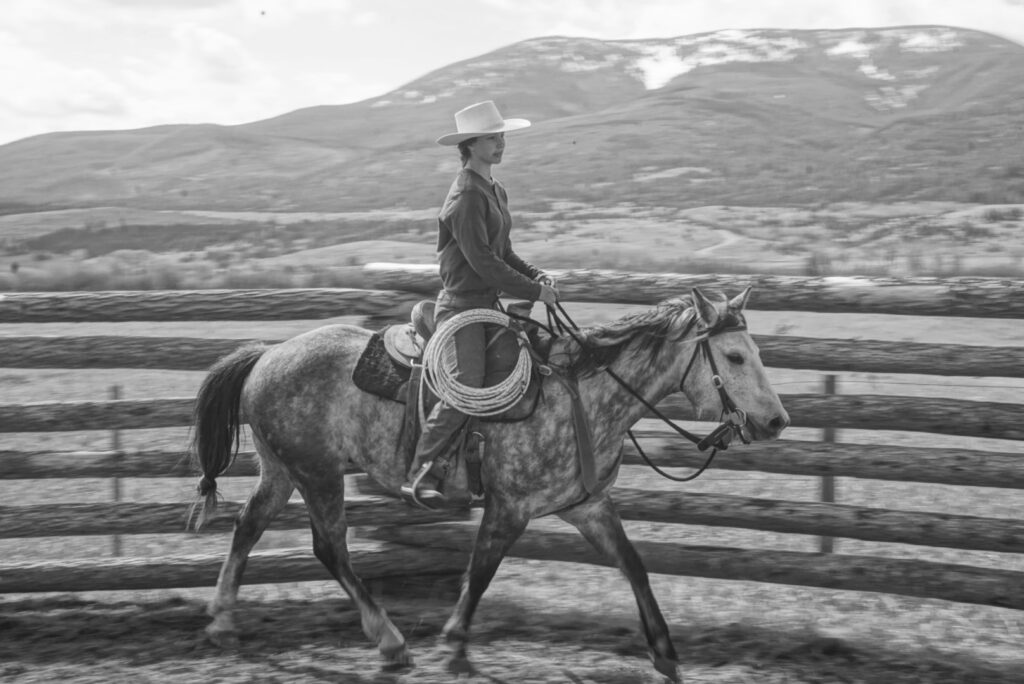
What is your land ethic?
May 2026, 2nd year apprentice
If you asked a year ago or even a few months ago, What is your land ethic? I’d have a completely different idea and understanding of how I think about it currently and I’m sure by the end of my apprenticeship I’ll have a new idea probably contradicting much of what I’ll say here.The only thing I know for certain is that I don’t know anything and that I have a long path ahead of me to even begin to scratch the surface of knowledge that the land and its stewards have to teach.
My connection to the land began at a young age, backpacking through the mountains of the west with my family and friends. I was diligently taught to stay on the trail, never pick wild flowers, and leave no trace that you were ever there. For a long time, this ingrained in me a clear divide; humans were strictly observers, and wild spaces were to remain untouched. This black and white view fostered a sense of separation, implying that human presence was inherently destructive.
It wasn’t until recently that my paradigms began to shift, and I started to see the positive impact humans could have on land and its creatures. Experiencing this firsthand through the eyes of my mentors planted the seed within me that we are all deeply interconnected within the complex community of nature, and how we choose to caregive shapes its future. I realized that animals, soils, humans, and everything in between form a community that depends on each individual to thrive; nature has evolved through reciprocity and stewardship, with our actions determining whether the land flourishes or stagnates. When our impact remains stagnant, the land becomes degraded, but when we act thoughtfully, it can respond positively. Wildflowers bloom and carbon is sequestered where livestock grazing and browsing is managed well, creeks that once dried up seasonally now flow into the autumn thanks to aquifer restoration from better water infiltration in the soil, and native species return to habitats long deserted by them.These seemingly miraculous events are made possible by educated stewards committed to doing right by the land, and for me, that is the core of my ethic: to nurture and steward the land and its creatures, understanding that our mindset and active participation are the keys to a healthy, thriving land-community.
As I move forward, I hope to continue to have the privilege of practicing reciprocity with the land because I have chosen to pursue a life that is real. Real purpose, real passion and even real problems. Now that I know the fulfillment that this way of life brings, I can never go back. My compass will always point towards a land based life.
How did you get interested in agriculture? And what are you hoping to gain from your apprenticeship?
May 2025
Imagine this: a young kid, around five or six, carrying a baby blue backpack with a horse embroidered on it (this was pre-bedazzle days, or it would have been covered with gems too). Inside were notebooks with colorful horses running through grassy meadows on their front covers, and horse sketches filled the pages where schoolwork should have been. To top it all off, that kid was wearing a bright yellow sweatshirt with, you guessed it, a horse on it, cowboy boots, and was probably spewing “fun” horse facts to anyone who would listen. This kid was me.
To my parents’ dismay, I never quite grew out of that phase. While I retired most of my horse shirts and notebooks, the passion remained. As I grew up, I continued to carry this unwavering enthusiasm into new spaces and passions like 4-H and FFA. These organizations gave me a window into the world of small scale conventional agriculture. Working with animals and using my hands brought me great satisfaction, but something was missing. As a kid, I spent a lot of time in the wild spaces of western Montana. These touching experiences instilled in me a deep respect and appreciation for the land around me. As I delved deeper into conventional agriculture, I found these lessons challenged. I thought it was just a matter of “toughening up,” so I continued to follow this path and wound up at Montana State University studying livestock management right out of high school.
This is about when my quarter-life crisis hit me. I dropped out of college after a few semesters basing the decision solely on a gut feeling that I was not on my true path. I filled my time with odd jobs, from waitressing to dog training. Even though things were generally stable, I still felt a persistent lack of fulfillment. Each day I questioned where I
was heading with all this. So I did what any young, lost 20-something should do – I went back to my roots.
Turns out, my “roots” took the form of a Craigslist ad calling for a seasonal guide for a nearby outfitter. I had nothing to lose and not much going for me, so I took the leap. It felt like I was resurrecting my horse-obsessed younger self, albeit with a few less horse-embroidered belongings. This job rekindled my passions and set me on a path back into agriculture, inspiring me to re-enroll in school, this time as a sustainable food and farming major, and find other jobs that fell into the agricultural realm. Gradually, doors began to open for me, every opportunity a step closer to who I wanted to be.
Looking back, the winding path makes sense. From a horse-obsessed child to a lost young adult with nowhere to turn but back. Now, as I learn and work within regenerative agriculture, I have found a profound sense of purpose – a journey that began with a blue backpack, and continues with a commitment to healing myself, my community, and our land.
Final Reflections
November 2025
As the sheen of fall fades to winter, I am once again reminded of the cyclical nature of this work. A soft blanket of snow, clouds of breath around the noses of cattle, layers of wool under canvas jackets, all just the same as it was last February when this began. The day’s tasks are also reminiscent of those I struggled through last spring but this time around, it’s a bit different. I’m a bit different. I have found a steady rhythm within the day-to-day, tuned to the click of an imaginary clock counting down my days here.
This countdown is both a relief and a dread. I welcome the rest that comes with a town winter but leaving also means that I’ll be out of the little stucco house that I’ve grown to love, away from the animals I’ve grown to know and separated from the land and community that I’ve grown to cherish. But that’s just it, I’ve grown. I’ve grown to know myself better, what I do and don’t want. I’ve grown to understand the way of life that agriculture brings, the hardships and celebrations that ensue. I’ve grown.
That is the point of this program, to grow young agrarians, but why do I so often wish that I hadn’t grown into this ranch? It has become a place of familiarity and comfort, something my life has lacked for sometime now. But, as one of my early mentors would say, “you can’t grow in your comfort zone and you can’t get comfortable in your grow zone.” So here I grow again, leaping back into my “grow zone” to continue my journey.
I am excited to say that my next step is a second season with the NAP program at Oxbow Cattle Company in Missoula, MT. This operation has been on my mind for a few years now and I am very grateful that this coming season will be my debut there. I can’t thank my current mentor site enough with Brian, Jim, Carrie, and Kaye Bignell, the inspiring staff at Quivira including Mattie Griswold, Hayden Vandeberg, and Julie Sullivan, and my fellow NAP apprentices, for their support this season and helping me get to this point. I am deeply grateful.
I also think it would be inappropriate not to thank the animals here at the Bignell Angus Ranch too, although they would probably prefer that I show my gratitude with extra feed rather than words. At the top of my list is Dixie, the Bignell’s young colt who showed me what it means to be forgiving and dependable while also giving me a much needed confidence boost. Contrastly, Rambo the big five year old gelding who humbled me. The cow herd that taught me that there is strength in community. The chickens (and Carrie) who made me breakfast every day. The cow dogs that saved my butt more times than I’ll admit. And finally, the neighbor cows that made me appreciate the Bignell herd’s docility much, much more.
And here I am, at the completion of my own cycle here in the Blackfoot valley. My things are packed, the horses and cattle are out to winter pasture, goodbyes are said, and there is nothing left to do but go. Still, my heart can’t help but feel heavy with gratitude for this place that has shaped me so much in such a short time. All I can say now is thank you.