


About
the Ranch
North Texas:
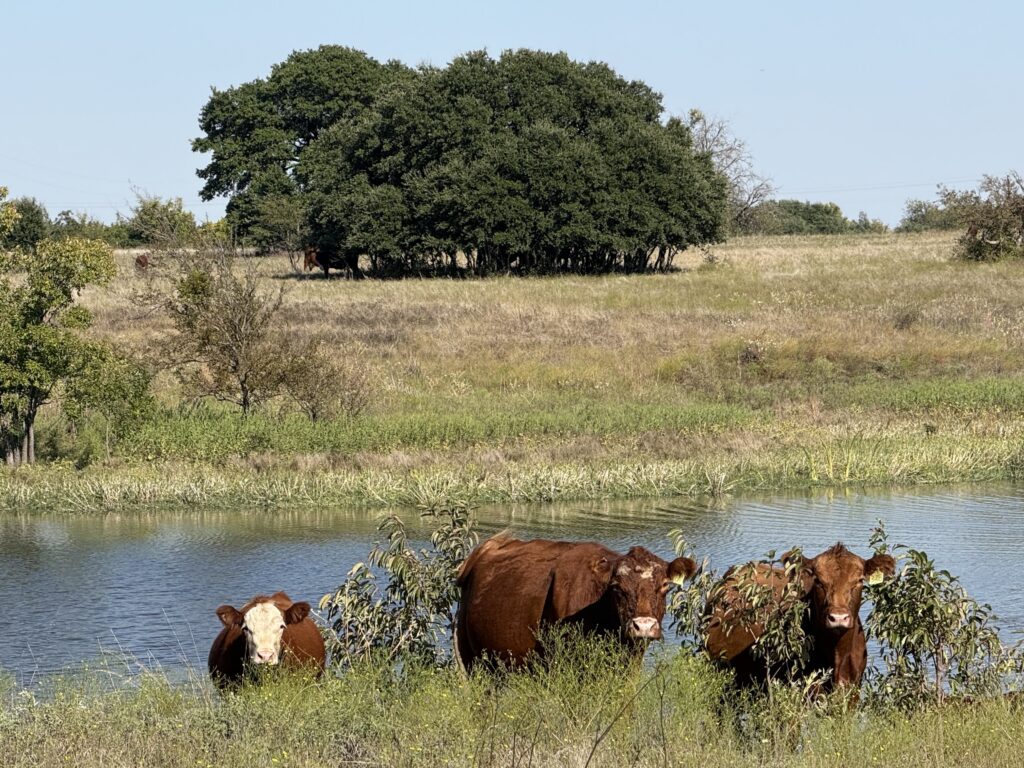
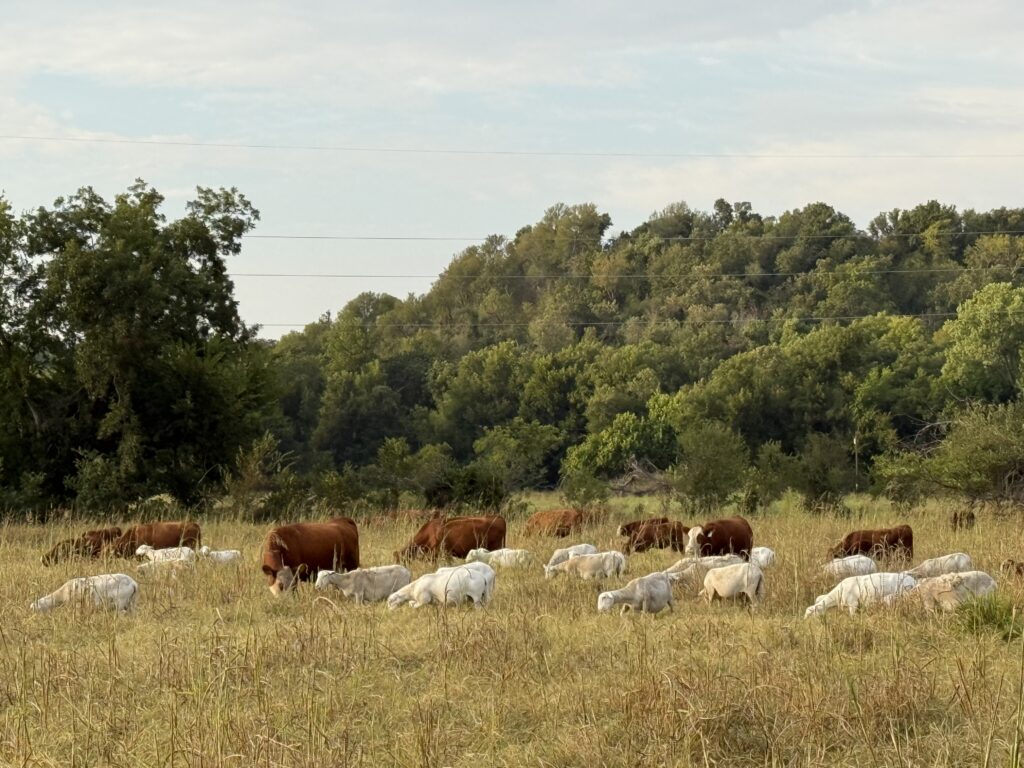
In North Texas, we are about 20 minutes north of Decatur, Texas, and we operate two separate ranches. The first is the Leo unit (4,200 acres), and the second is the Pittman Unit (800 acres). We run a cow-calf operation with sheep at the Leo Ranch and a Heifer development program with sheep at the Pittman Ranch. We also have the Josey Pavilion, which is where we hold workshops and host other events for people that are in our area of work. The Leo Unit has been under holistic grazing practices since the 1980s. The ranch was originally around 900 acres, but has grown to around 4,000 acres over the decades. The ranch is in the Cross Timbers eco-region of Texas and sits at about 800’ elevation. The Leo is within the tall-grass prairies of the Central Grasslands but features rolling hills with interspersed woodlands. Annual rainfall for the Leo is typically over 30”.
West Texas:
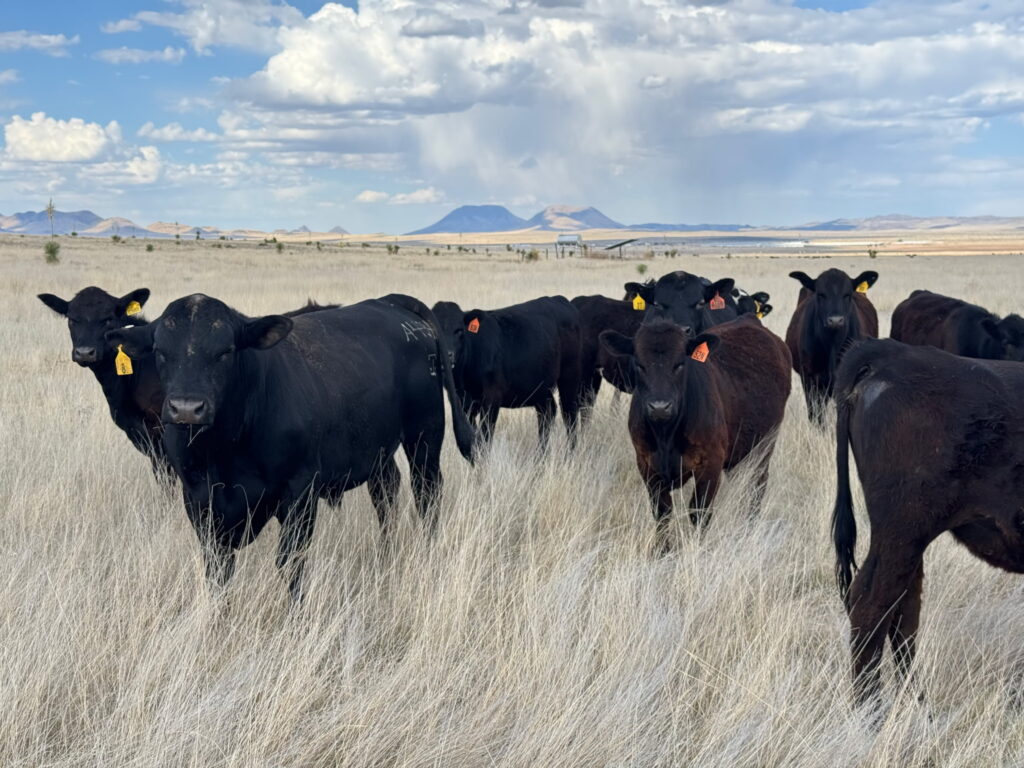
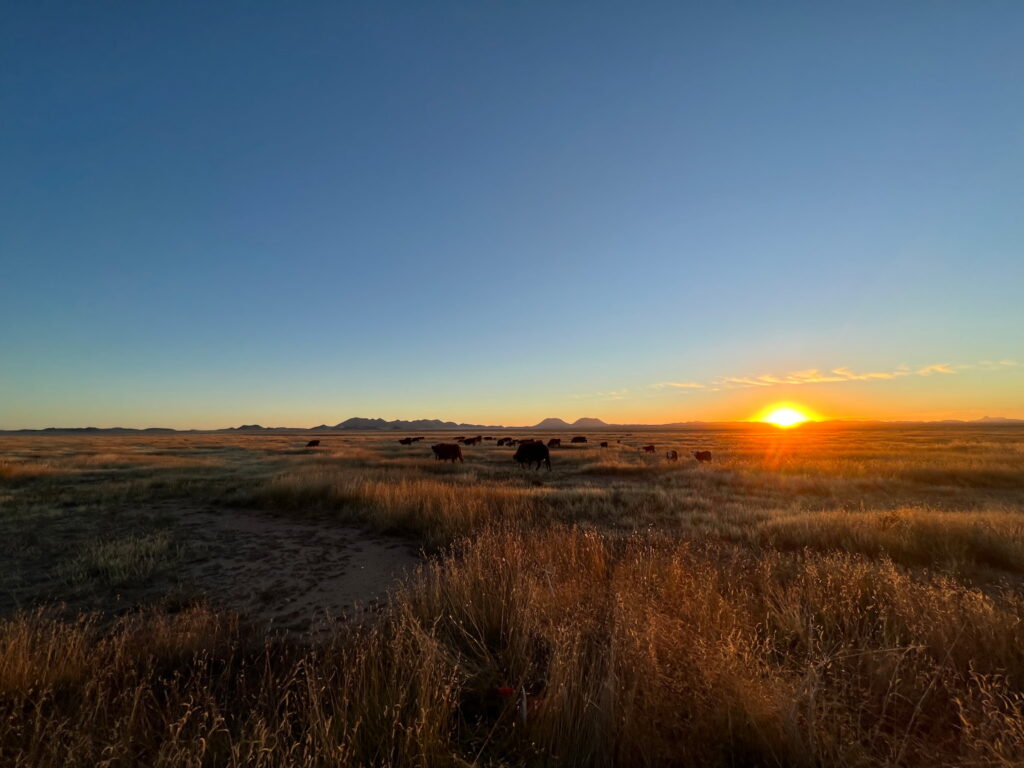
We operate over 16,000 acres in the grasslands just north of Marfa,TX. We are a hybrid cattle operation as we have a small cow/calf herd in which we seek to raise replacement bulls and heifers to support the larger cow herd in North Texas. We also seasonally custom graze the ranch with outside cattle. Normally, cattle come from local ranches and are grazed from November through May. We seek to allow the ranch to be destocked from May-October, and at the end of our growing season, around September, conduct forage inventories and determine how many contract animals we wish to receive on the ranch in the fall. Infrastructure is in quite good shape for a large West Texas ranch. The normal maintenance and improvements can be expected between buildings, fences, water troughs and lines, and working pens. The Mimms ranch is a beautiful but harsh ranch and we prioritize grazing and pasture management to do all we can to improve the watershed health of this high desert ecosystem. Located in the Trans-Pecos eco-region of Texas, the Mimms Unit is located at about 4800’ elevation on the Marfa Plateau and is a mixed prairie, primarily featuring short and mid grasses, within the Chihuahuan Desert. Annual rainfall historically averages around 15”, but more recently has seen closer to 7”. The Foundation purchased the ranch in 2008.
Check out their website here.
More Story
Check out their website here.
Regenerative Practices
We practice regenerative agriculture mainly through our grazing management. We have multi-species grazing in North Texas: sheep and cattle, sometimes goats. We have a hybrid grazing operation in West Texas, utilizing a seasonal stocker cattle operation as well as a small resident cow herd. We move cattle daily much of the time and try to use appropriate recovery periods (60 days to 365 days) as well as stock density to achieve soil health goals. We do annual monitoring that includes plant species makeup, plant spacing, and water infiltration rates. We work with numerous researchers and universities to monitor water, soil, and wildlife health (including insects/pollinators). We keep active grazing plans as well as drought plans.
Tour
the Ranch
The Mentor
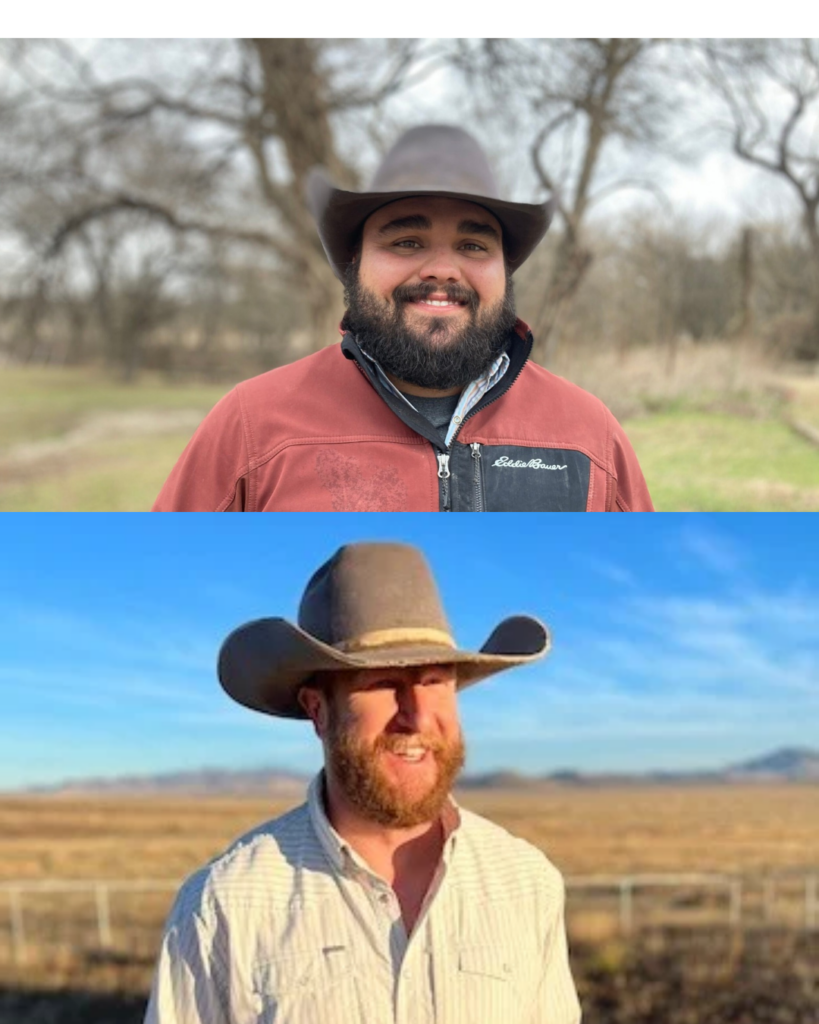
Jake McNamara (Mentor & General Manager of Ranches):
I grew up in central Texas sixty miles north of Austin. Went to college at Angelo State University and graduated with a bachelor’s in animal science and a minor in Range and Wildlife management. While attending college, I worked for the Texas A&M Sheep and Goat research center in San Angelo and on their various ranches around West Texas. After graduating from college, I moved to Bronte, Texas, where I managed ranches for different landowners and day worked on ranches. In June of 2021, I saw the Foundation had an opening and came to work here. Before coming here, I had no prior knowledge of regenerative agriculture. Coming from a commercial agriculture background this was a whole new style of management, but I saw what could be accomplished through some of these practices. Raising livestock and stewarding the land is a true passion of mine, and I am very fortunate to get to educate other people who have the same interest.
Zach Vaughn (Mentor & West Texas Ranch Manager):
I have lived in the Big Bend region of Texas for a decade and very much love this area, though I am not from Texas originally. I grew up in the Southeastern states where I actually did not work on farms or ranches. I served in the Army for 6 years, and when I left the service in 2017, I decided to pursue ranching and land management as a career. I graduated from Sul Ross State University with a bachelor’s degree in natural resource management with a concentration in sustainable ranch management. It was during this time, in 2019, that I was an intern with the Dixon Water Foundation on the Mimms ranch in Marfa. I enjoyed my time during the internship and am grateful to be the manager at the Mimms now. I have come to love ranching and land management. I very much appreciate the value of planned grazing and how when applied correctly it can greatly improve the overall ecosystem health. One of my favorite aspects of my job is training livestock. We ask a lot of cattle to perform well, I enjoy building and training cattle to be healthy and easy handling.
The Duties Of
The Apprentice
What will an apprentice do?
What skills and traits are required?
- Basic understanding of holistic management practices
- Basic understanding of ecological processes
- Experience with truck/driving basics: safe driving, using 4×4, backing up
- Experience changing a tire
- Experience operating basic power tools
- Experience hooking up and maneuvering a trailer
- Basic animal safety and awareness
- Experience or knowledge of animal feeding and watering
- Experience in fiscal responsibility (managing a budget; handling company funds)
- Adaptability to changing ranch schedule
- Experience following, interpreting instructions, and follow through to completion of tasks
- Workplace safety awareness
- Experience working within professional policies and procedures
- Experience with professional communications, written and oral
What skills will an apprentice acquire?

Nuts & Bolts
More Details
Living on the Ranch
Town Information
North Texas: There are a couple of towns within 30 minutes with everything you would need: Denton- 27 miles, Decatur- 19 miles, Gainesville- 25 miles. The University of North Texas is in Denton, there are plenty of young people and events that go on there. The closest airport is DFW and it is about an hour and fifteen minutes away
West Texas: The closest town to the Mimms Unit is Marfa, TX, which has a population of around 1,700 people. Marfa is around 60 mi from the Rio Grande and border with Mexico. There is one chain grocery store in town and one independently owned grocery that provides more specialty items. Alpine, TX is roughly 30 mi from Marfa and has a population around 6,000 with a larger grocery store and ‘natural foods’ store. Both towns have museums, art galleries, bars, live music, and restaurants. Marfa has fewer options, but has several award nominated restaurant options and is a tourist destination, largely due to the estate and legacy of the late artist Donald Judd. Alpine is home to Sul Ross State University, which features the Big Bend Ranch Rodeo as well as college sports, and student groups. Fort Davis is 20 mi north of Marfa and occasionally hosts dances. The closest airports are roughly 3 hrs away in El Paso, TX, and Midland-Odessa, TX.
Housing
North Texas: Stand-alone furnished apartment with a full kitchen and Wi-Fi. Washer/dryer in office, next door to apartment.
West Texas: Private bedroom, bathroom, and sunroom in ranch house office. Kitchen is used by other staff during business hours for coffee, etc. House includes Wi-Fi and washer/dryer.
Laundry
North Texas: In office, next door. Also used for linens for other ranch accommodations.
West Texas: In ranch house. Used for other Ranch linens.
Internet Service
North Texas: We have Starlink that works great at the ranch house
West Texas: There is Wi-Fi available for use at the office and apprentice housing.
Cell Service
NOTE: As cell phone is primary mode for communication, Dixon Water Foundation will reimburse Apprentice for monthly cell phone charges.
North Texas: AT&T works best around the ranch. Verizon has no service here. We use cell phones to communicate daily; we prefer to not use headphones while using heavy machinery (tractor).
West Texas: Cell service on the ranch and in town is good. If traveling around the area, there are plenty of remote stretches where there is little to no cell service. We do use our phones to communicate daily. During work hours, we are professionals and utilize our cell phones and headphones when it is appropriate.
Visitors
All visitors must have permission to visit the ranches in advance. Permission can be granted by any Foundation management staff. This policy applies to anyone who is not an active employee, including employees on leave, former employees, vendors, and suppliers. Visitors may only be near Foundation animals when accompanied by Foundation staff. Visitors are not allowed to touch or handle animals. If visitors will be staying in Foundation housing with an employee for more than two nights, the employee must gain permission from their director supervisor.
Food
Access to beef at both locations.
Pets
Prefer no pets in order to preserve cleanliness of housing/office and outdoor pets pose a safety risk. But willing to discuss.
Drugs / Tobacco / Alcohol
Alcohol is allowed during non-working hours. Smoking is not allowed in Foundation buildings but allowed outside of buildings. No illegal drugs are allowed on Foundation property.
Firearms
Apprentice is allowed to bring personal firearms. They will not be used for Foundation business. Personal firearms must be kept in their Foundation housing and stored and handled safely.
Vehicle Info:
A work vehicle will be provided for business use only. Personal use of Foundation vehicles is not permitted. There will be an opportunity to learn manual transmission but it’s not required. Tractors are manual transmission and training is available.
Work Hours / Time Off
Working Hours
North Texas: hours may vary depending on time of year. Summertime we usually get started at daylight (6am) before it gets hot, get our hours in and go home. West Texas: Schedule is highly seasonalTime Off
North Texas: Work two weekends per month. During those weeks, days off will shift to Mon-Fri, with two consecutive days off. West Texas: Apprentice will work five days per week, weekend work is likely. When weekend work is involved, days off will shift to Monday-Friday.
Health Insurance
Explore
Apprentice Stories
Check out past apprentices and what they have to say about their experience.
- 2026 Apprentices, Frontier Ranch Management, Music Meadows Ranch, New Agrarian Blog