Karl Thidemann is co-founder of Soil4Climate, a non-profit that advocates for regenerative agriculture, with a focus on grazing and the restoration of grasslands. In this podcast he makes the case, supported by extensive scientific research, that the restoration of grasslands can provide a multi win-win –– for the climate, biodiversity, soil health, good nutrition, farmer profitability, the water cycle, rural communities, anti-desertification, and maintaining traditional agrarian practices worldwide. He also challenges vegan narratives about food and climate, and, with a poem and a song, reminds us that the arts are an important part of the change toward a greener, healthier world.
Thidemann makes references to many farmers and ranchers during this podcast and I’ve linked to their work in the timeline below.
This episode is from the Down to Earth archive and was first posted on February 22, 2022.
Timestamp & Show Notes
1’25 reducing emissions not enough, you have to remove CO2 from the atmosphere
1’48 what are the most efficient and least expensive ways of drawing down CO2
2’01 absorbing carbon into soil has many other benefits–restoring ecoysystems, rural economics, herding cultures worldwide
2’12 Judith Schwartz: Cows Save the Planet
2’47 responding to soil damage from both overgrazing and crop agriculture
2’51 William Ruddiman in 2005 Scientific American article, “How Did Humans First Alter Global Climate?”
3’01 connecting climate change with the dawn of agriculture 10,000 years ago
3’36 the stabilizing of the climate by early farming practices
3’52 Jonathan Sanderman at Woodwell Climate Research Center, writing about carbon
4’05 the degradation of soil is thousands of years old, but it’s risen precipitously in the last 150 years
4’31 farming was the #1 source of emissions until the 1960s
5’14 climate system works over a very long time scale
5’33 climate systems work over a 1,000-1,500 year life cycle because of ocean circulation
6’07 the heat being stored in the ocean will be emitted for centuries to come
6’14 Susan Solomon MIT, even if we cut all fossil fuels immediately, the planet would keep warming for 1000 years
6’45 stopping emissions is not enough, we need to go down to an acceptable level in the atmosphere
7’04 300 parts per million is now believed to be the highest safe level of CO2 in atmosphere–or lower
7’37 you can’t negotiate with physics
7’51 biodiversity crisis
8’17 regenerative farmers and grazers are helping to preserve biodiversity
8’52 the benefits of no-till and cover cropping
9’05 for cover cropping you need at least a dozen species
9’15 Gabe Brown used over 50 different species of cover crops (featured in the film Kiss the Ground)
9’28 the greater the diversity of plants, the greater the diversity of microbial life under the ground
9’55 Woody Hastings and quorum sensing: when you have a diversity of members in a community, they can do things that no individual member could do on its own–e.g. drought and insect reslience
11’22 Glenn Elzinga‘s cattle eat hundreds of native plants
11’33 David Johnson on the community of soil
11’39 bacteria in the soil analogous to human communities where people have different roles
12’40 2 billion hectares/5 billion acres of abandoned crop land across the earth – land that was once fertile and is now desertified David Pimentel 2013 paper
13’35 until now we haven’t known how to restore that land
13’55 Allan Savory says there are two kinds of ecosystems: dry, brittle environments and moist, non-brittle
14’37 moist environments will come back on their own, but brittle ones won’t. They need animal impact from grazing animals to regenerate
15’04 Gregory Retallack, paleobotanist from University of Oregon.
15’13 there’s a misunderstanding in the rewilding community that if you rest the land without animals it will come back. But it doesn’t because the grasses need to be grazed in order to thrive.
15’45 regenerative grazing is not “less harmful” it’s actually beneficial
16’21 the natural movement of animals on a landscape prevents overgrazing
16’43 Alejandro Carrillo in Chihuahua desert
16’50 grazing improves land and increases carrying capacity
17’18 because there’s such a huge quantity of grasslands–1/3 of the planet’s land mass–the potential for drawing down carbon is also huge
17’30 grazing land gets a bad rap because people don’t understand
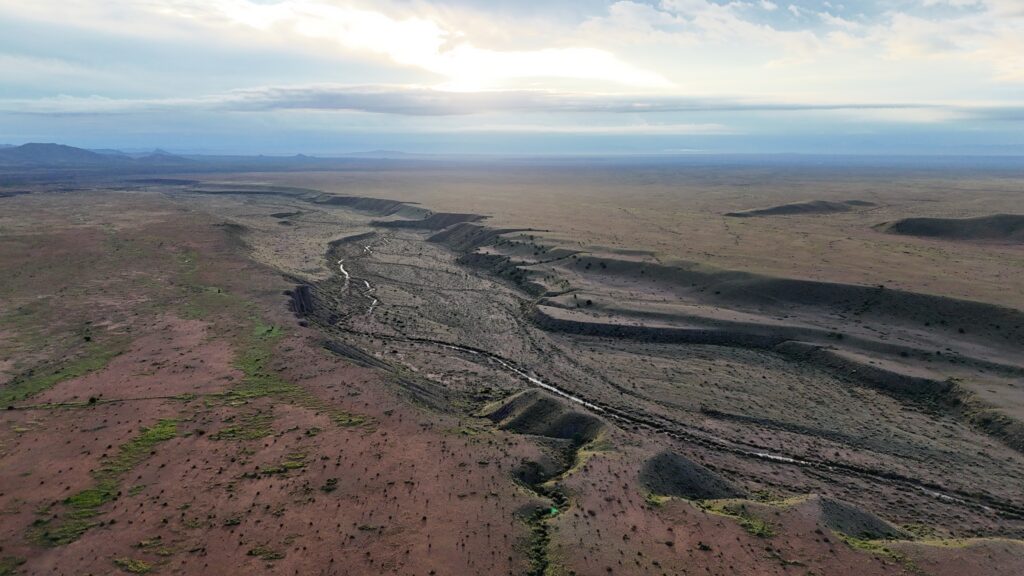
18’01 most of the world’s deserts are degraded grasslands
18’23 David Montgomery, author of Dirt: The Erosion of Civilizations says civilizations tend to last about 500 years, which is the amount of time it takes to destroy topsoil through plowing
19’03 grazing as a function of time, not animal numbers. André Voisin https://en.wikipedia.org/wiki/André_Voisin
19’48 overgrazing is about moving the animals in such a way that the plants grow best
20’22 holistic planned grazing
21’34 destocking is an important part of the process
23’41 how you get started on land that’s extremely degraded
24’33 Carillo’s cows eat mesquite
25’01 the benefits of ruminant manure–it has lots of microorganisms and is fungal rich
25’53 Dan Dagget‘s book Gardeners of Eden, about reclaiming a mine site where there was no biological life at all and getting it back to life with hay and cattle
26’37 wildlife returned
26’51 big conservation organizations are using regenerative grazing worldwide…including The Nature Conservancyand WWF
27’00 Audubon conservation ranching program
27’24 the Africa Centre for Holistic Management has lots of wildlife because of its grazing practices
28’14 nutrition is poorer because the soil is poorer, so when you restore the soil the food is healthier
29’40 fungi are the “masterminds” of the operation in the sense that they keep track of the minerals and providing them to the plants
29’51 Walter Jehne, soil scientist from Australia
30’05 Buckminster Fuller “cosmic accounting”
30’46 healthy soil can go on for thousands of years if it’s managed properly
31’19 no need to use synthetic fertilizer
32’13 thinking about the math problem of sequestration
32’34 “think global, farm local”
32’56 agroforestry is great for carbon sequestration because carbon is captured in trees as well as soil
33’16 soil scientist Dr. Rattan Lal said we could remove all excess carbon in the atmosphere via regenerative ag and reforestation
34’02 Tom Newmark of the Carbon Underground wrote an essay called “Don’t Call Mother Nature a Sink,” challenging the idea that there is a limit to the amount of carbon that soil can absorb
36’00 there’s no limit to how much soil can be formed and therefore sequester carbon
34’31 there’s no limit to how much soil can be formed and therefore sequester carbon
35’17 it’s widely thought, but not true, that it takes 500-1,000 years to build an inch of soil. This is a myth that comes from Charles Darwin’s observation of Roman ruins.
36’34 by using regenerative cropping and grazing, especially grazing, you can add soil on top of existing ground
36’55 Allen Williams from Understanding Ag has recorded ranchers growing soil at the rate of an inch per year
37’08 soil scientist Christine Jones calls it “breathtakingly rapid”
37’34 Michael Pollan describes in The Omnivore’s Dilemma how Joel Salatin was able to build soil quickly
38’19 how do you take all this land that needs to be restored and restore it
39’05 it takes a global community to solve these problems
40’07 entomologist Jonathan Lundgren wrote about the profitability of regenerative agriculture
40’51 all this is in contrast to the vegan narrative that says ending animal agriculture will save the earth
41’27 much overlap with the vegan ideas about animal cruelty, CAFOs, and industrial crop ag to feed livestock
41’42 differences like in the understanding about whether grasslands need grazing
42’16 all ecosystems need animal impact
42’33 Russ Conser said, “It’s not the cow, it’s the how.”
43’36 Fred Provenza and nutritional wisdom
44’40 plant-based “meat” products
45’36 climate impact of a regeneratively raised hamburger is much better than that of a plant-based burger, which are ultra-processed factory products
46’13 the plants in plant-based “meats” come from unsustainable farming practices
46’46 lab-grown meat also problematic in its inputs
47’07 when you’re eating a plant-based burger you’re “eating patents” — it’s all about intellectual property
47’21 Stephan van Vliet and others have shown that the proteins in real meat are superior nutritionally
47’57 working with Maasai Center for Regenerative Pastoralism
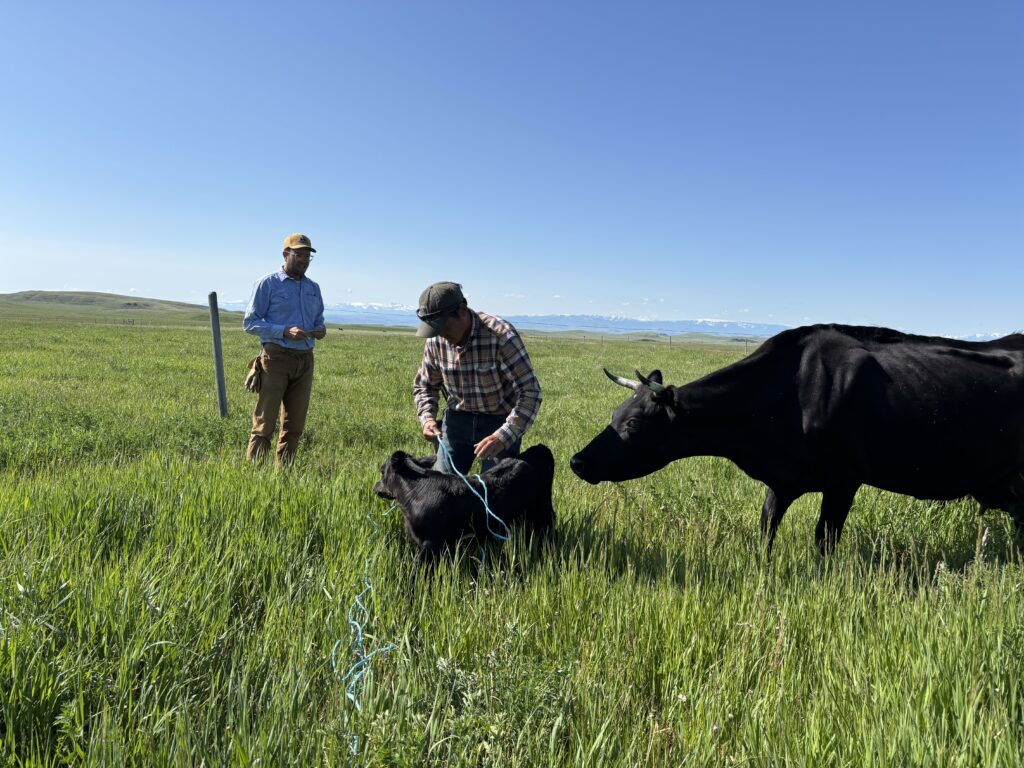
48’35 bringing animals together into a community herd
48’49 livestock are the bank accounts of these people and there was some hesitation
49’14 restoring the land means being able to stay on the land and not have to move to the city
52’46 Brand New Sky song