

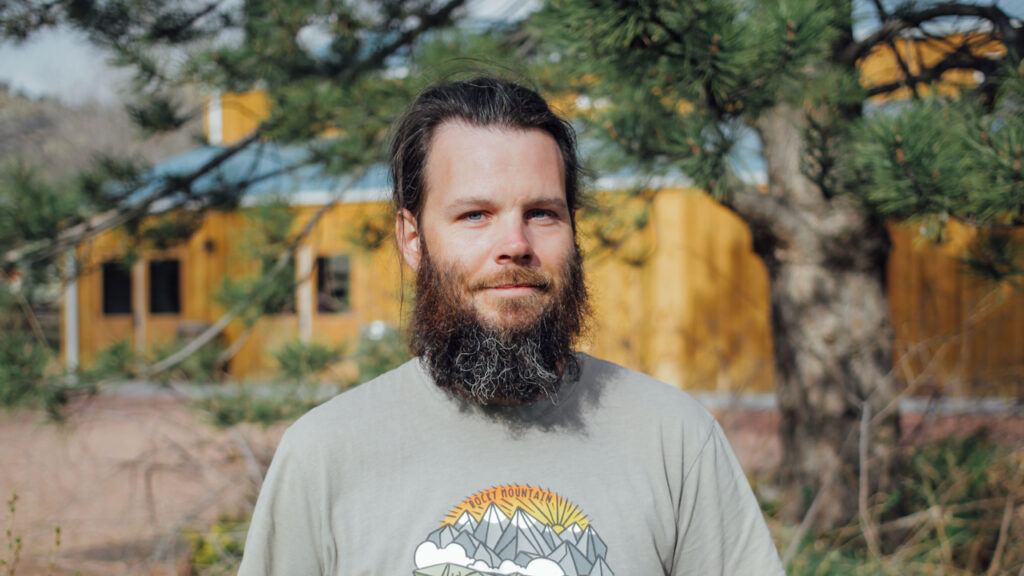
2nd Year – What is your land ethic?
May 2025
The idea of articulating a land ethic was initially very daunting, but on reflection I don’t think that this should be the case. On reflection, I think that the broad strokes are the heart of the thing, and the tendency to reduce a general philosophy to a series of rules or dictums is inevitably followed by those rules being gamed and subverted. The short life cycle of terminology used to describe alternative agricultural movements is a pretty strong testament to this, in my opinion.
The broadest stroke of my conception of my relationship to the land is reciprocity. My interpersonal ethics have long been guided by the idea that if someone got something off someone else while offering nothing in return, they were engaging in exploitation. I do not think that our relationship to the nonhuman world is vastly different. If I draw my sustenance, and for the last year this has been spiritual sustenance as well as my living, from the land I had better be thinking hard about what I am able to offer in return. Robin Wall Kimmerer talked about reciprocity extensively, and suggested that humans are uniquely capable of offering gratitude, which I think is a very good place to start. Many of the ways we seek to manage the land can also be seen as a sort of reciprocity, to my mind. When we try to graze in a way that mimics natural patterns, we are essentially substituting ourselves for the predators that shaped herbivore behaviors on the pre-human landscape, and have the opportunity to show reciprocity by helping our livestock enjoy a quality of life greater than that of the prey animals on a landscape lacking human management. Human intervention can manage herbivore populations with tools that are more humane than starvation, disease, and predation; I think this is the critical component to any claim that we can have on the lives of these animals.
I think that one of the great problems of our age is that people have a great desire to do service, but also feel a great distrust towards the institutions that historically would have been the recipients of that service. For me, the opportunity to work on the land has been a solution to this dilemma; I am sure that my understanding of animal welfare, ecosystems, food systems, and every other part of this work will evolve over time; but in the interim what I can provide seems welcome, and I am happy to continue paying it out.
Final Reflections
November 2024
My time at Round River has exceeded all expectations. This has probably been the densest learning period of my life, and I am very aware that there is a great deal left for me to learn if I am going to remain in the industry. I came to this apprenticeship with much more interest than experience, and most of the skills I have needed have been built from the ground up. The fact that this program facilitates this sort of transition makes it such an asset, and I wish I had found it years ago.
One of the biggest discoveries has been how fulfilling this work can be. I came to this space looking for work that advanced conservation and environmental goals, a longtime generalized interest in regenerative agriculture and with zero exposure to cattle. It was an open question to me whether I would be able to cultivate a passion for this work and an interest in sticking with it long term. It rapidly became clear that I had landed in a great place, that values that were driving me were understood and respected here, and that I thoroughly enjoyed doing the job. It seems like a sign that something I believe to be important turns out to also be the most satisfying work I have engaged in.
I feel like I have made a solid start on most of the everyday skills. I am eager to move from maintaining our fencing and water systems to learning how to design and expand them. We had an infrastructure planning meeting last week, and I would not have guessed that the prospect of fencing and burying pipe could be so exciting. Building out infrastructure that will make a material difference in both my work and our ability to successfully manage our grassland next season is engaging in a way that simply maintaining what is already here can’t compare to. I realize that building stockmanship skills will be the work of a lifetime, but I think I can say that I am not embarrassing myself at this point in that journey. Observing the landscape has been a special pleasure for me. This is another skill that I suspect I will be building for many years, but learning some of the plants on our range and starting to estimate forage levels has me looking forward to it. It has also provided a new hobby, in the form of documenting everything I can get a photo of on iNaturalist. I feel like the last time I asserted a strong skill (in fencing), I was immediately faced with a problem that completely flummoxed me, so I won’t say there is anything I have mastered. The important thing, I think, is that the way forward is both visible and seems reasonably attainable. The business side of things and the cattle market still seems somewhat intimidating, but I think this will also be a surmountable challenge in due time.
The people this program has brought me into contact with have been a highlight of the apprenticeship. My mentor is both knowledgeable and committed to providing a ramp into this industry for interested outsiders. My coworkers are both Quivira alumni and have taken a great deal of time explaining the why of our tasks to me as well as providing perspective from having worked at other operations. Seeing an example of the prospects after apprenticeship has been very reassuring as I begin to plot my future in this space. I honestly haven’t given much thought to what I want to do after completing a second year where I am, but feel pretty confident I am building the skills and connections I will need when the time comes to make those choices. I have also been fortunate to be able to interact with our rangeland monitoring program and other outside sources of expertise. Being ‘plugged in’ to such a large pool of knowledgeable and passionate people and potential career opportunities is both valuable and exciting.
How did you get interested in agriculture? And what are you hoping to gain from your apprenticeship?
May 2024
I feel as though I have been peeking over the fence at agriculture for most of my life. The most vibrant memories I have of my grandfather are in his garden. The garden was gone before I appreciated it, but in retrospect it was deeply influential. I began reading about regenerative agriculture in highschool, and have followed the topic off and on since then. I never had any concept of how to actually insert myself into that world, but I was scratching around the edges of it. There was an element of service in the idea of regenerative agriculture that appealed to me, although I doubt I could have articulated it at the time.
Spending over a decade in construction helped crystalize that appeal. Many of the projects I was working on struck me as soulless, and many of them involved encroachment on natural landscapes that seemed more worthy than what I was helping to replace them with. While the physicality and problem solving aspects of the work appealed to me, a great deal of the broader social, economic, and environmental context was troubling. Many people live bifurcated lives where their work is purely instrumental and separate from the things that are enjoyable or aspirational for them. Agriculture seems to be an enormous outlier, in that regard; for many practitioners it seems less a career than a lifeway. Reading about people whose work featured the things I enjoyed in my career while also being oriented towards goals that brought value to the world at large began to speak to me in a very direct and concrete way. To my mind, this social holism is a natural extension of the holistic frameworks we talk about in regenerative agriculture.
All of this is very abstract, and this apprenticeship is very much a test of whether the earthier realities are also something I have, or can develop, an affinity for. So far I feel like I am maintaining enthusiasm and keeping my head above water, but our calving season is just beginning and it is very early days yet. This feels like the best start I could hope for, though. Round River seems like a great operation, and I have continuously been excited to take on new tasks, encounter new parts of the property, and experience more of the seasonal rhythm of the ranch.
Final Reflections
November 2025
Coming to the end of two years in The New Agrarian Program, I think it is fair to say that the arc of my life has been altered. I have long had an interest in regenerative agriculture, but with no idea how to break into the space I easily could have gone the rest of my life daydreaming about this work and never getting to actually do it. There have been ‘back to the land’ movements in this country almost continuously for more than a century, so programs that facilitate this return are serving an important cultural need. I am grateful to have succeeded in a transition that has frustrated smarter, tougher, and harder working returnees.
Ultimately, two years feels like it is merely the earnest money on acquiring the skills necessary in this field. There are times that it feels like I don’t have the days left to me I would require to learn all of the things I need to know. Thankfully, I seem to have learned enough to earn myself a place in this field and to have the opportunity to keep beavering away at the mountain of knowledge and skills I didn’t know I wanted to know. Especially interesting to me is how this work unites very abstract and very concrete fields. My reading list for the next year has both technical works on pasture assessment, erosion control, and animal health as well as books about environmental ethics, natural history, and sociology. I suspect this generalism, or holism, is the core of the attraction that perennially draws people back to agricultural lifeways. It does sometimes take effort to maintain the framing of the issue as an exciting and perpetual challenge rather than thankless trek towards an ever receding horizon, however.
One of the most valuable things about the program is a community that has accreted around it. The people who share themselves in connection with it and the people who take the leap to become apprentices have consistently been a joy to me, and a major consideration in staying where I am has been that it will allow me to contribute to and help shape that community going forward. There is an element of service in this that I did not previously know I desired, but that feels increasingly central to what I want for myself. Thinking about what that might look like in the years to come has been something that has occupied a great deal of my thoughts, recently. I do strongly feel that there is a niche and need for near-peer support, and hope to grow into the ability to help provide it.