


About
the Ranch
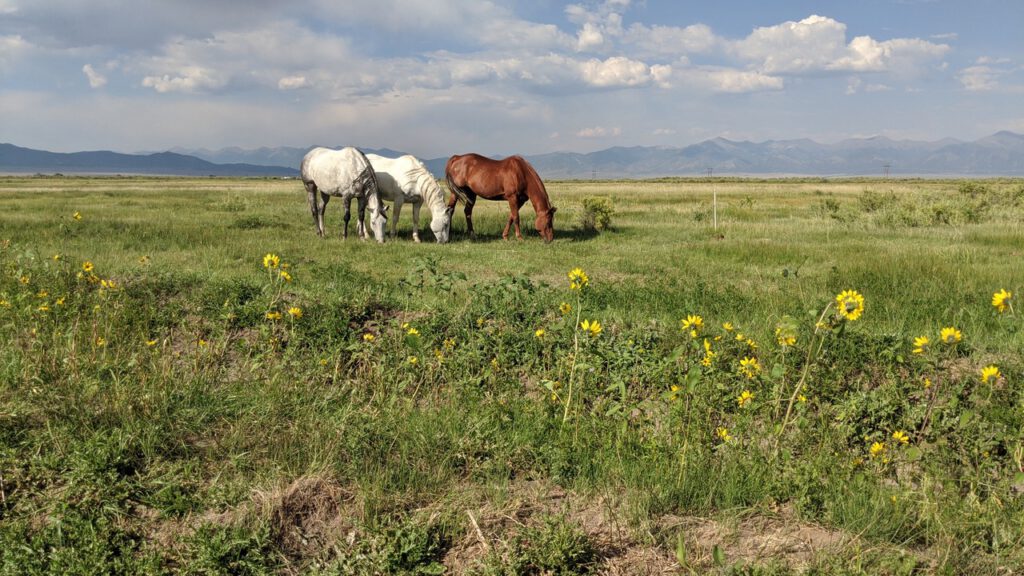
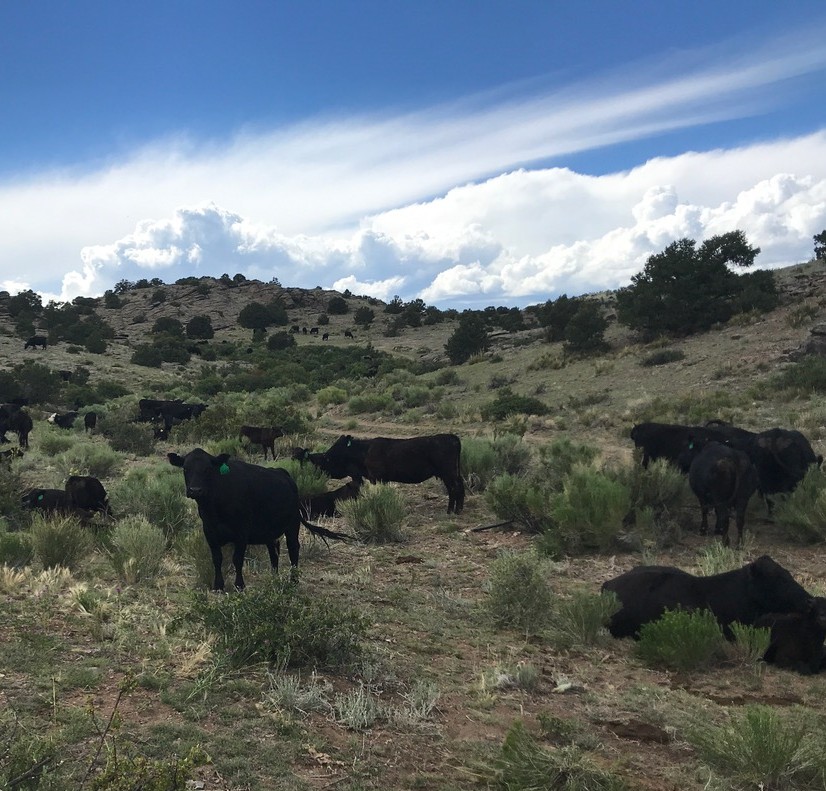
San Juan Ranch is a third-generation grass-fed/grass-finished cattle ranch located in the San Luis Valley near Saguache, Colorado. Owned and operated by George Whitten and Julie Sullivan, the ranch runs on irrigated meadows, uplands, a BLM allotment, leased ranch land, and farm ground planted to cover crops for grazing. With over 40 years of Holistic Management practices with land and decision-making, San Juan Ranch embraces life-long learning, and adapts to changing environmental conditions and the long-term impacts of climate change. The ranch runs its mother herd, retains ownership of most calves and markets them as live animals to other ranches or through their direct marketing business. The herd is genetically adapted to thrive in the high-altitude steppe environment of the San Luis Valley.
More Story
George and Julie are widely known as leaders in regenerative ranching. This land remains productive in the worst of drought due to decades of attention to soil health and biodiversity. They manage their BLM grazing permit proactively by alternating the timing of grazing, monitoring utilization and species diversity to ensure range health.
George and Julie work closely with local soil scientists and range ecologists. Past partnerships include: the U.S. Fish and Wildlife Service on the Baca National Wildlife Refuge, Holistic Management International using cattle to restore organic farmers who raise cover crops as grazing forage to improve soil carbon and soil structure while providing high-quality finishing forage. San Juan Ranch is certified by the National Audubon Society Conservation Ranch Certified Bird-Friendly Habitat program.
George and Julie understand profoundly that it is all about relationships — between themselves, the land, and the ecological processes on which all the other relationships depend. Their management illustrates that ranching can restore healthy biological processes while providing a livelihood and contributing to a sound and peaceful rural community. Personally and professionally, they work to dissolve the prejudices between ranchers and environmentalists, urban and rural people, and to build bridges between them. They strive to find real solutions to heal the planet and keep family agriculture alive in the U.S.
Regenerative Practices
- Active practitioners of Holistic Management as a decision making tool
- 40+ years of planned grazing on irrigated and non-irrigated land, including range with records demonstrating results
- Herding and placing livestock used to manage grazing on open landscapes
- Bullseye Target monitoring program
- Soil health practices, including static fungal compost and other projects
- Human wellness and wholeness is a regenerative practice we strive to incorporate
Tour
the Ranch


The Mentor
George Whitten & Julie Sullivan
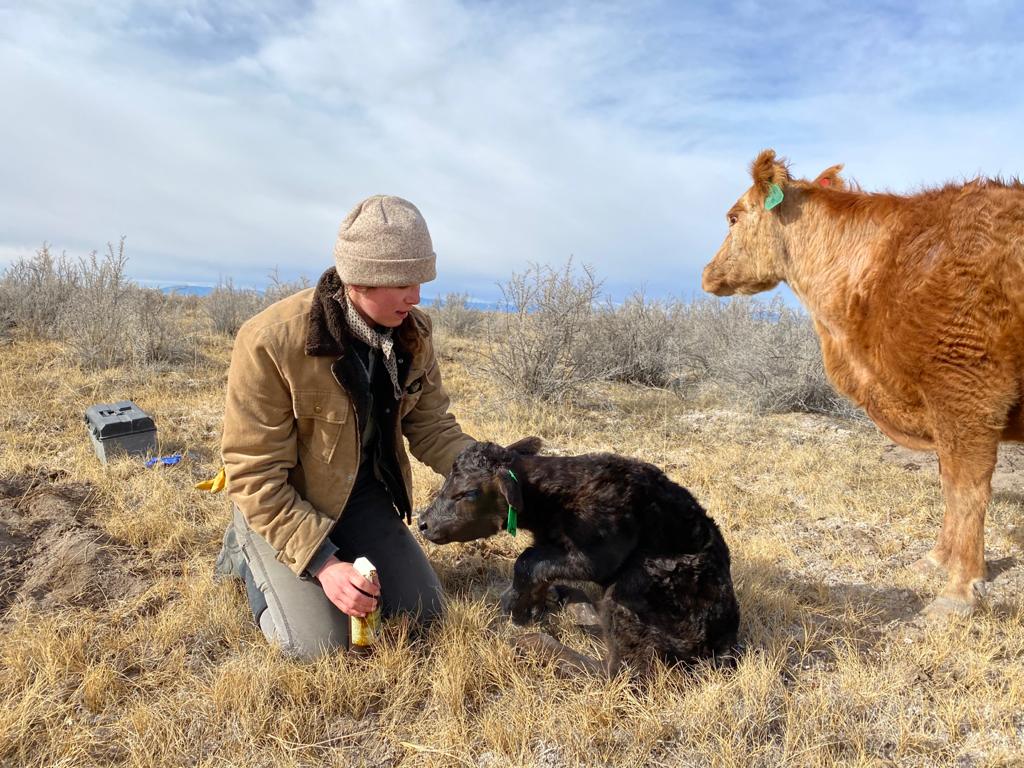
George Whitten and Julie Sullivan, owners and operators of San Juan Ranch, are the founding mentors of the New Agrarian Program. They have mentored 18 NAP apprentices as well as interns, many of who have gone on to manage or run their own operations.
George’s Whitten’s grandfather homesteaded in the San Luis Valley in the 1890s, and the family has been ranching (sheep or cattle) in the valley since that time. As an active member of the ranching community since the 1970s, George has worked towards collaborative forward-thinking management of resources in the San Luis Valley. A practitioner of Holistic Management since the 1980s, George uses this as a lens and adapts management practices to fit the land and operation under his management. The symbiotic relationship between cattle, grasslands, humans, and the capacity of intact grasslands to store carbon are central to George’s vision and practice as a rancher. George has been deeply involved in sustainable water management for over 30 years and currently serves as a Regional Commissioner with the Colorado Department of Agriculture.
Julie Sullivan was born and raised in California. After working as an actor, arts administrator, and starting a private progressive preschool in Seattle, she earned her Master’s in Environmental Education and subsequently taught interdisciplinary environmental education at both undergraduate and graduate levels for the Audubon Expedition Institute. She spent those years challenging students to look beyond surface conflicts between environmentalism and agriculture, and to see the common values and goals shared by both points of view. After over a decade of living outside teaching for the Expedition, Julie joined George at the ranch in 2001. Julie works with Quivira Coalition NAP as mentor support as well as offering mentor training workshops to other programs in North America.

The Duties Of
The Apprentice
What will an apprentice do?
- The apprentice will work closely with the mentors on a variety of ranching tasks, including daily cattle care: feeding, health monitoring, and pasture movements; building and maintaining ranch infrastructure (fences, water pipelines, vehicles); pasture planning; analyzing and planning for nutritional needs of cattle at each stage of the grass finishing process; monitoring forage quality and utilization; record keeping for certifications), CattleMax records, marketing our beef, and financial analysis and decision making.
- This apprenticeship is a professional training program for people ready to make a significant commitment to a life in agriculture. Preferential consideration will be given to applicants with experience in or a sincere commitment to the “indoor’ work of managing a business, in addition to their skills and interest in livestock and land. Enthusiasm, physical strength, stamina, and a proactive eagerness to learn from your mentors are required.
- This apprenticeship is physically, emotionally, and intellectually challenging. The apprentice and mentors work together closely, and the ranch location is usually the most rural place where an apprentice has lived and worked.
What skills and traits are required?
- Capable of working both independently as well as in a close-knit team
- Curiosity about both the HOW and the WHY of land and animal practices
- Physically capable of and willing to commit to long days and physical labor
- Clear communication and the ability to ask for help when needed
- Ability to manage professional and healthy relationships with co-workers, partners and neighbors
- Desired skills include horsemanship trailer driving, basic mechanics, and Google Sheets/record-keeping.
What skills will an apprentice acquire?

Nuts & Bolts
More Details
Living on the Ranch
Town Information
- Grocery shopping: There is a Safeway, City Market, and Walmart 1 hr south (Alamosa) and a Safeway, Natural Grocers, and Walmart in Salida (1 hr north). Saguache is 13 miles away and has a small grocery store and a health food store open TH – SUN. Crestone, 20 minutes away, has a grocery store and a good health food store.
- Dining: Saguache has a diner and a pizza place that is open only a few nights a week. Crestone has a few restaurants. Del Norte is 40 minutes away and has a great pizza place and a few other restaurants. Alamosa and Salida have many places to eat.
- Entertainment: Both Alamosa and Salida have small movie theatres, live music, live theatre, coffee shops, bookstores, etc. Saguache has a small movie theatre open FRI- SUN. In the summer there are many weekend festivals, farmers markets, car shows, rodeos, etc. Hiking, biking, rock climbing, fly fishing, and river rafting are also available.
- Additional items of interest: Crestone is an internationally known center for spiritual communities, with an Ashram, several Buddhist centers, and a Carmelite monastery.
Housing
Housing is provided in either a cabin at headquarters or in the house, which is also the ranch office (but is not the mentor’s home). This is located 1 mile from the mentor’s home, on the original Whitten Homestead site. The cabin has a kitchenette, and the HQ house has a full kitchen. A washer and dryer are provided in the housing area. Utilities and internet are provided free of charge, though we ask you to be mindful of the heat usage in winter. Both the cabin and the HQ house are fully furnished with kitchen supplies, bed linens, etc.
Laundry
Available in the housing area.
Internet Service
WiFi is available in the HQ house and may also work periodically in the cabin.
Cell Service
Verizon is the best provider.
Visitors
We encourage apprentices to have visitors. Please discuss visitors in advance so that the ranch schedule can be adjusted. Visitors are asked to follow all ranch policies while visiting.
Food
The apprentice stipend includes a food stipend to cover groceries for your workday meals. Shared meals happen regularly with the cooking duty rotating through apprentice and mentors. Ranch beef is always available for your personal use. Garden space is also available for the apprentice.
Pets
In general, no pets are allowed as part of the apprenticeship. If the apprentice has a working dog or horse they wish to bring, this needs to be discussed during the application and interview process.
Drugs / Tobacco / Alcohol
- We are a NO SMOKING ranch – this means in housing, vehicles, and on-site.
- A drink after work is totally fine, but please, no partying or getting drunk
- While cannabis is legal in CO, we ask that you not use it on-site
Firearms
Please discuss during interview.
Vehicle Info
Ranch Vehicles
All of the ranch vehicles are standard transmission. Apprentices will need to know how to drive stick-shift. Previous experience with backing up trailers is not required but greatly appreciated. If the need arises for an apprentice to use a ranch vehicle for personal needs, this can be discussed and will be determined on a case-by-case basis.
Personal Vehicles
The apprentice will need the flexibility of his or her own vehicle in order to run personal errands such as purchasing groceries and traveling on days off.
Work Hours / Time Off
Working Hours
Work days begin between 7 and 8 am most days, though during calving season and when we are on the BLM range, someone will start their day earlier on a rotating basis. The days are varied as it goes with ranching, and the priority is always the animals. The length of the workday varies with the season, and apprentices are included in weekly team meetings that plan work schedules.Time Off
The apprentice will have one fixed day off a week, and often two, with additional time off when the ranch calendar allows for it. Additional days for specific activities, medical appointments, etc. are possible with advance notice. Be aware that the ranch and the herd dictate workflow over the course of the apprenticeship.
Health Insurance
Explore
Apprentice Stories
Check out past apprentices and what they have to say about their experience.
- 2025 Apprentices, 2026 Apprentices, Elk River Livestock, New Agrarian Blog