




About
the Ranch
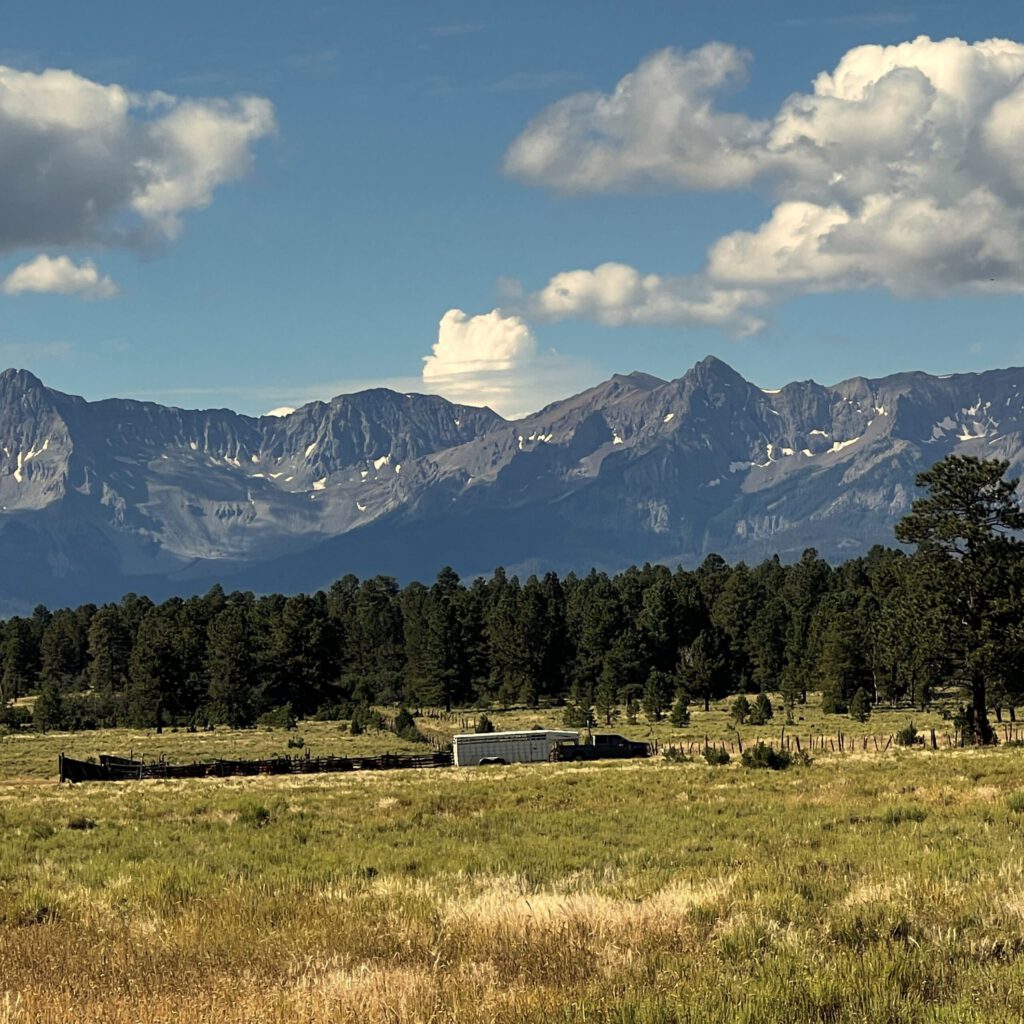
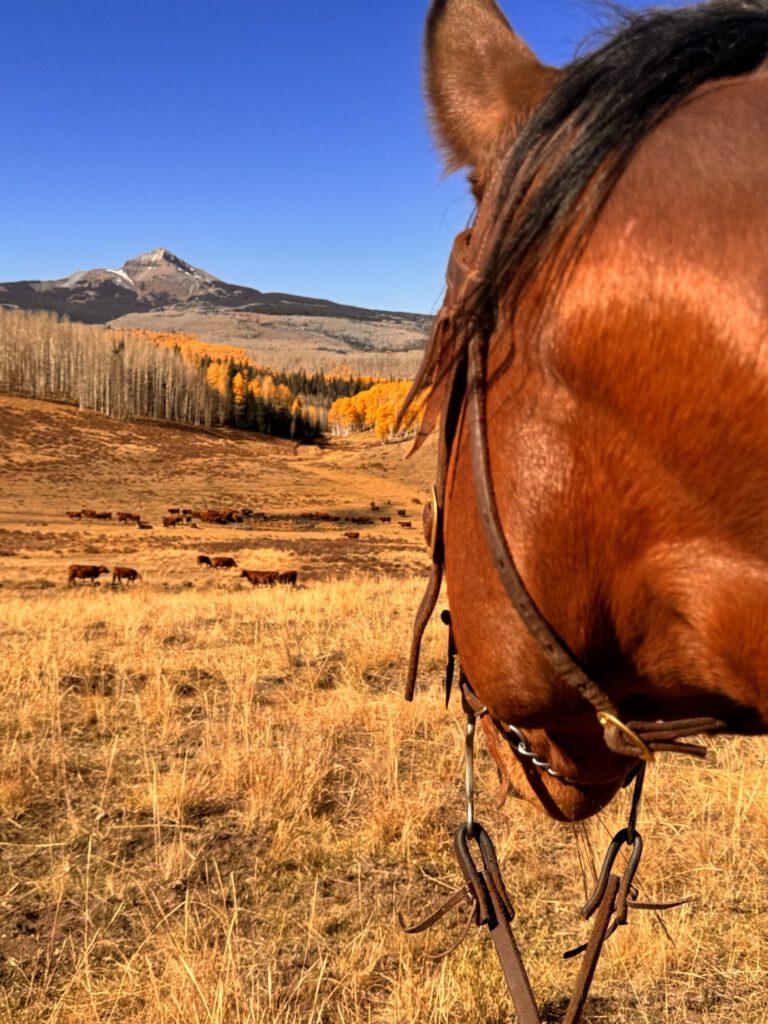
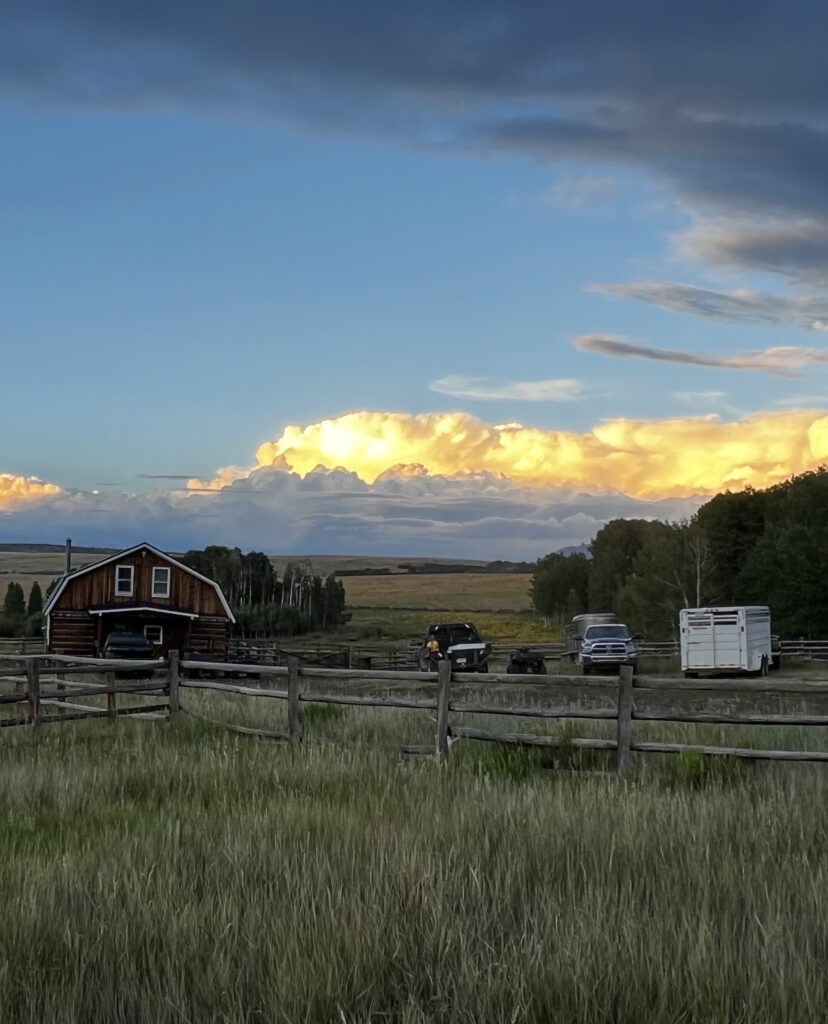
Wolf Cattle Company ranch headquarters is three miles outside of Ridgeway, Colorado, in the San Juan Mountains of Southwestern Colorado. Our goals are to keep ranching and agriculture heritage alive by improving and growing a business that is healthy for the land, the people involved, and the greater community – which also includes positive economic growth and viability. The ranch includes lower elevation irrigated meadows, some juniper–pinion hill country and high elevation up to 11,000 feet summer range.
More Story
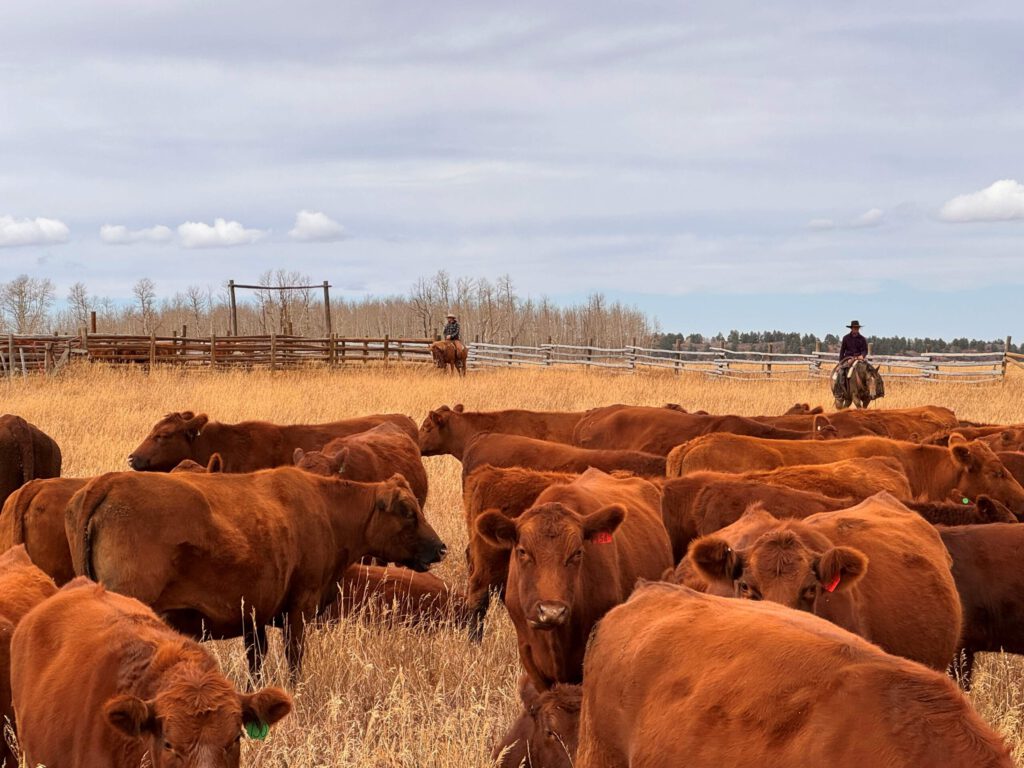
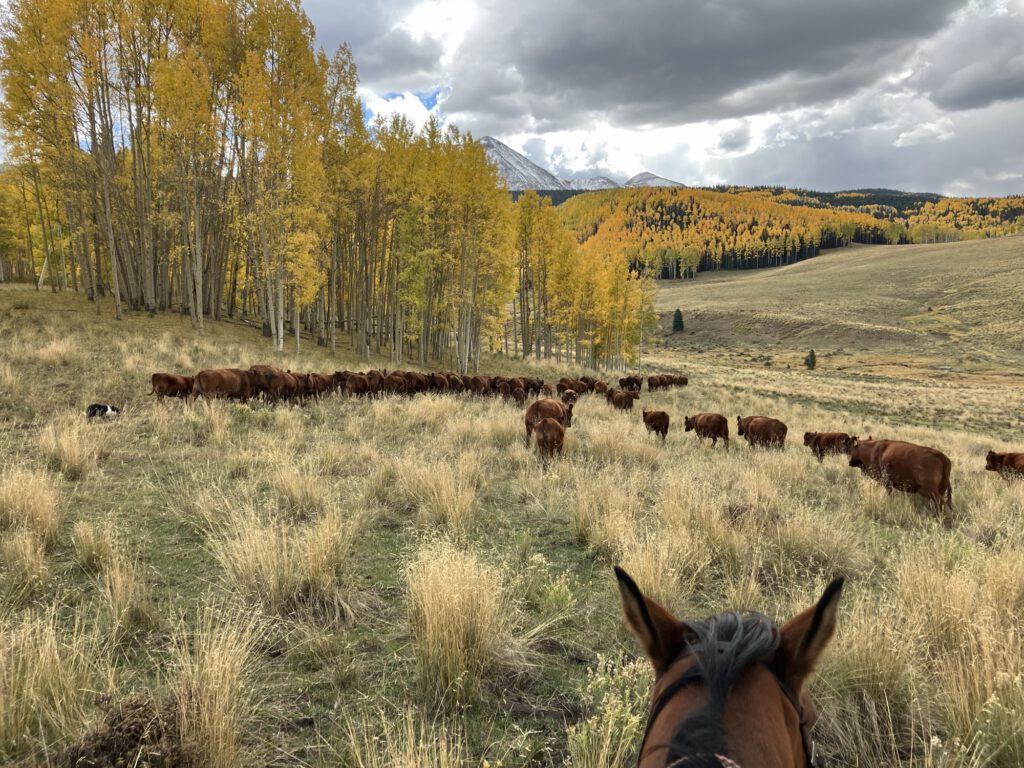
We are a cow/calf operation, raising stockers with some custom grazing, as well as raising native hay on irrigated meadows. We believe regenerative principles are healthiest for the whole (land, people, water, animals, wildlife, and community). The application of these principles varies in different environments. We are big believers in rotational grazing, whether it’s with hot fence or range riders, and good livestock handling practices are very important to us. We do use grazing plans and have a drought plan. We have in the past done more soil and forage monitoring; an updated monitoring system is something we would like to implement and could be a possible project for an apprentice to help get going.
Regenerative Practices
- Rotational grazing
- Range riding
- Drought plan
- Grazing plans
- Soil and forage monitoring
Tour
the Ranch
The Mentor
Hannah and Joel Northey
Joel grew up in Colorado, and went to school at CSU for animal science. Hannah grew up in southern NM – 5th generation of a pioneer ranching family that came west on a wagon train in 1886. We have ranched in several western states over the last 26 years together – CO, WY, NE, NM, and spent time in MT. We have worked on many different types of operations in various environments and are continual learners who are always looking for better ways to achieve results for the people and the land. We love history, heritage, and the beauty of the West.
We have both attended the Ranching For Profit School and have been members of the Ranch Management Consultants Executive Link program for 6 years. Our philosophy regarding agriculture is probably best summed up as: Look for the timeless principles and then find the best application for the environment you are in. Agriculture in the western US needs to be regenerative and sustainable to the whole – healthy land, water, wildlife, livestock, people, community, and economics. We have 3 amazing sons and 1 exceptional daughter-in-law who are pursuing their own dreams but do come to help at certain times of the year.
Other ranch employees that will interact with the apprentice include:
Emerson De La Cruz – Immigrated to the US about 20 years ago from Peru where he grew up and obtained an Animal Science degree. He has a wealth of knowledge to share.
Duncan MacGregor – Was a farrier for many years and has managed several ranch properties in the past. Also, a very good leatherworker – he is great with infrastructure and equipment and is a great teacher.

The Duties Of
The Apprentice
What will an apprentice do?
What skills and traits are required?
What skills will an apprentice acquire?
- Learning effective and efficient irrigation practices
- Learning Colorado water rights and how it works
- Calving
- Herd health – doctoring cows, calves, what to look for and how to pick up on a sick animal in the early stages.
- Forage monitoring, carrying capacity.
- Poisonous plant ID
- Cattle feeding and care – balancing rations and intake.
- Cattle body condition
- Use of equipment – feed outfit, skid steer, track hoe, loader etc.
- Stockman ship practices
- Rotational grazing
- Range riding
- Repair and construction of fences
- Record keeping and record systems.
- Horse heard health and maintenance.
- Branding
- Ranching for profit practices
- Water improvement projects

Nuts & Bolts
More Details
Living on the Ranch
Town Information
We are well situated as far as the ranch location; the headquarters are about 3 miles from the town of Ridgway, CO. There is a small grocery store there, several restaurants, and a medical facility. Main grocery shopping is done in Montrose, about 27 miles away, and that is also the nearest airport location. We are 20 minutes from Ouray, CO and about 45 minutes from Telluride.
We are in a big tourist area, which can have its pros and cons. Lots of traffic at times and dangerous roads – but also many activities (concerts, festivals, rodeos, etc.). The high country pastures sit between Norwood and Ridgway and are about a 45-minute drive, so the summer work is more isolated at times.
Housing
We have several cabins that are all a possibility, all of which are in nice shape. If there are 2 apprentices, they will share a cabin but will have separate bedrooms. All cabins have full kitchens and baths with hot water etc.
Internet Service
We do have Starlink satellite internet that can be moved to different locations.
Cell Service
AT&T or Verizon – depending on which part of the ranch you are on. Some places have no cell coverage.
Visitors
Guests are allowed on the ranch and must be approved by a manager. No long-term stays.
Food
We can provide some beef and elk meat to the apprentice. When we have a busy schedule on the mountain, we sometimes grill out together.
Pets
We will consider a working dog and a couple of working horses, and can work out the details with the individual. The ranch does not allow studs, and we have our own working dogs, so other outside dogs need to be spayed and neutered.
Drugs / Tobacco / Alcohol
No smoking of any kind in any building or vehicle. Other tobacco use is fine as long as it’s used respectfully. Drinking alcohol is fine during non-working hours as long as it’s not affecting work performance, and not while driving a company vehicle. No cannabis use during working hours.
Vehicle Info
Ranch Vehicles
Apprentice will use ranch vehicles and machinery for work.
Personal Vehicles
Apprentice will use ranch vehicles and machinery for work.
Work Hours / Time Off
Working Hours
In the busy season, our general work hours are 7-6, with half a day on some Saturdays – In the slow season is 8-5, with Saturday work only being what’s needed for feeding and other cattle care. Some days are shorter, and some longer, depending on what we are doing. We try not to work Sundays as much as possible. We are very family-oriented and usually rotate Saturdays, so a person doesn’t work every weekend.Time Off
We try not to work Sundays as much as possible. We are very family-oriented and usually rotate Saturdays, so a person doesn’t work every weekend.
Health Insurance
Explore
Apprentice Stories
Check out past apprentices and what they have to say about their experience.