


The Sheep Jawbone and the Fool’s Gold in the Harvest
Words and artwork by Angie Mestas
Originally published in Resilience, Issue #46 – Colors of Home
My family comes from a long line of sheep herders and cattle ranchers. For us, sheep head is a delicacy. Whether a birthday, a special visitor or harvest celebration, a roasted sheep head is the center of a meal for special occasions. My family savors the tender crispy meat from the jaw bone and a tender piece of salted tongue.
Growing up, after the meal, my brother and I would use the discarded jawbones as pistolas (or pistols), and use coffee cans and bottles as targets. When we turned the jaw bone upside down, the teeth looked like a barrel and the jawbone a handle. It was a game we’d play for years, pistolas. The jaw bones would be left in the yard ‘til a ranch dog carried them off.
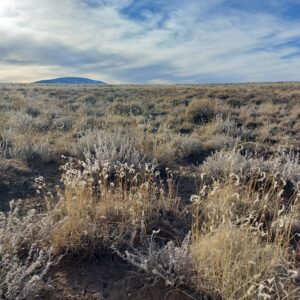
During a recent harvest celebration commemorating filling the freezer with lamb, I was enjoying the meat off the jawbone and noticed sparkling golden mineral accumulations on the teeth. After some research into the strange appearance, I learned that livestock can get gold- and silver-appearing accumulations on their teeth based on the minerals of the plants, soil, and water they consume. Our livestock are raised along the southern Colorado and northern New Mexico border, and forage on native grasses, forbs, and shrubs, including blue grama grass and thread and needle grass. These plants are native to the region and provide early spring to late fall forage, going into dormancy at different times of the year, uniquely adapted to environmental conditions. During my digging, I couldn’t figure out which plants or minerals specifically lead to these metal-looking accumulations on the teeth; was it these native grasses, invasive weeds, or minerals from the water? But it led me to think more about the ecology of the region and nutrient and mineral cycling that’s happening all of the time between soil, plants, livestock, and humans.
I also think about how our agricultural communities were founded around sheep markets that the Spaniards brought in the 1600s. The land was taken from Utes and Navajos for the Spanish land grants, then for the Mexican land grants, and then for the U.S. government. Now, sheep are raised on private land or on leased public pastures. Who owns, manages, and benefits from the land has always been deeply contested. The sheep jaw bone as a pistol also references that fact. The gold on the jawbone, being minerals that only have a golden appearance and no inherent value, also reference the history of fascination with precious metals and the boom bust economies and false prospects that affected generations.
Being raised on a family ranch that benefits from both generational family land and public grazing allotments, and operates across a state border, I feel art gives me a way to unpack and focus on some of the complications and beauty that coexist in this space. I’ve gravitated towards folk-art that uses everyday objects as canvases, like pieces of scrap wood, metal, or bone and art that depicts scenes from everyday life. This type of art records and saves the stories of our lives and people around us. I like to use either found materials from the ranch, like the jawbones, or materials that are similar to the colors and textures of the desert, like chalks and muted colors.