

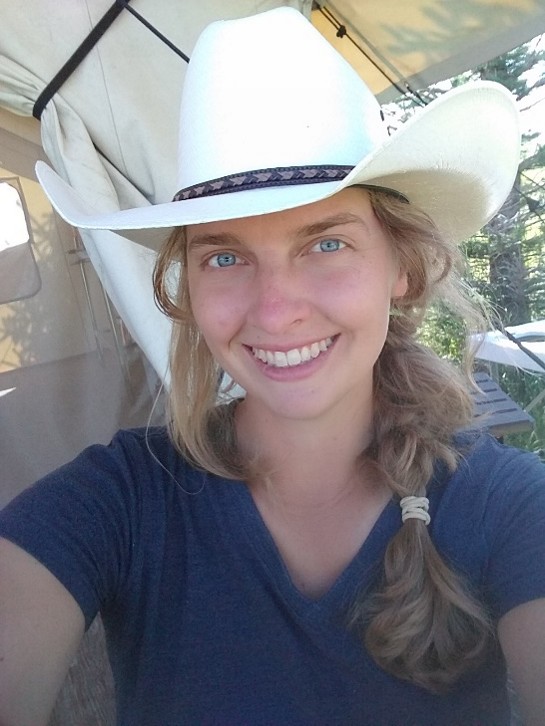
What contributes to a meaningful life and how do you hope this apprenticeship will help you explore that?
May 2025
A meaningful life is living for a purpose bigger than yourself: while enriching your own life along the way. By responsibly stewarding land and livestock, regenerative agriculture provides an opportunity to put this value into action. This apprenticeship has already taught me that values have meaning only when they are lived out. My hope is this apprenticeship will equip me with the essential skills to become an ethical steward of any land and livestock that will be in my care.
By learning about soil health, animal husbandry, the cattle market and many other skills, I hope to also enrich my own life. My desire is to experience the freedom that comes with self-discipline, work ethic, and opportunity. Agriculture embodies the American dream: anyone can succeed through hard work and determination. If you put in the work, take the risk, and be wise with the skills and assets you have, you will build a life worth living. Even if you are unable to attain your original goals, you will have built a beautiful life if you adapt and overcome the trials that arise. The end result may look different than you had once pictured, but life is about the journey more than it is the destination.
Regenerative agriculture is a way I can live for something bigger than myself. Through this apprenticeship, I hope to connect with like-minded individuals with similar passions, and I hope to find more opportunities to learn how to be a responsible steward of the world around me. This is what contributes to a meaningful life. This is the life I want to live.
Final Reflections
November 2025
Before becoming an apprentice at Elk River Livestock through the Quivira Coalition, I didn’t know much about regenerative ranching or the impact it had on the land. The idea of managing land in a way that improves it was something I didn’t know much about. When I started the apprenticeship, I wasn’t sure how interested I would be in this type of grazing, but it didn’t take long for me to realize that it was something I wanted to dive into. I quickly decided that I wanted to learn as much as I could.
Over the summer, I learned a ton about ranching and land stewardship. Every day offered a new challenge and opportunity to learn something new. I learned skills like fencing, roping, working with livestock, and even starting colts. I also learned when and how to move cattle to promote healthy forage growth and soil recovery, which is one of the main focuses of regenerative ranching. Doing this taught me how important timing, observation, and adaptability are to a successful operation. I came to appreciate how beef cattle can actually improve the land over time. This is something I had never thought about before.
One of my favorite parts of the apprenticeship was the community. Early in the summer, we went to brandings at neighboring ranches, at the brandings I learned to flank calves and got to experience the traditional way of branding cattle. After the brandings, there would usually be a cookout where everyone would hang out after. Going to these brandings helped me meet many people in the valley and build relationships that I know will benefit me throughout my career.
On weekends, I often went into town for the Steamboat Rodeo, which was always a great time. I would hang out with some buddies I had met in Clark and others from a ranch I had worked at previously. It was nice to have a good size town close by to transition from being in a busy college town to a rural community.
This experience at Elk River Livestock has inspired me to pursue a long-term career in beef cattle ranching, specifically one that focuses on regenerative grazing practices. I’ve seen firsthand how intentional management can lead to healthier soil, more productive pastures, and more resilient ecosystems. I want to be part of that movement and be apart of ranching methods that sustain the land.
This winter, I’ll be heading to South Dakota to work on a ranch near Wall. I’ll be there until late April, gaining new experiences and learning how different operations handle their grazing systems. After that, I plan to return to Colorado for a second year with the Quivira Coalition at Elk River Livestock. I chose to come back because the program offers great resources and mentorship. For example, the supplemental education calls they host once a month feature guest speakers who cover a wide range of topics from building healthy soil and managing finances to starting your own ranching business. These sessions have expanded my knowledge far beyond what I could learn just from hands-on work.
Looking back, this past summer was one of the most meaningful experiences I’ve ever had. It gave me practical ranching skills, a strong network of mentors and friends, and a clearer vision for my future in agriculture. I’m excited to continue learning, growing, and doing my part to make ranching more sustainable for generations to come.
Final Reflections
November 2025
The Texas heat had subsided, and the daylight was quickly fading. It was the end of a long June day, and I was scrambling to tear down the poly wire fence I had built only two days before. I quickly disconnected the jumper from the hot strand of poly wire, and in my haste, I grabbed hold of the poly wire that was supposed to no longer be electrified. Bam! Wrong strand of poly wire.
I had been working at the Long Arroyo Cattle Company for about six weeks, and I had high expectations for myself. The problem was that I wasn’t meeting them. I was making mistakes, feeling overwhelmed, and I had the sinking realization of exactly how much I did not know when it came to cows and ranching. When I started my apprenticeship, I knew I was going to be challenged. I knew this was the foundation of my knowledge and experience in regenerative agriculture, and I expected there to be bumps along the way. When it comes to learning about a new field of work, starting is always the hardest part.
When the shame spiral would start, I’d remind myself: It’s okay you don’t know what you’re doing. That’s why you’re here: to learn. What’s unique about an apprenticeship is the importance placed on learning. And keeping that in perspective helped me stay in a positive space emotionally and mentally.
Halfway through my apprenticeship, I realized that I was beginning to put the pieces of the puzzle together. I was asking more well-informed questions to my mentor, and when we had conversations about cows, I was beginning to see the big picture more clearly. When I first arrived in Texas, I didn’t know the difference between a modified-live vaccine and a killed vaccine. But now my mentor and I were discussing the pros and cons of custom grazing and why running grass-efficient cows was important.
My apprenticeship gave me something of great value: perspective. I had an interest in cattle since I was a teenager, but I hadn’t been able to explore and investigate that interest until arriving at the Long Arroyo Cattle Company. My time spent working at this cow-calf operation confirmed my passion for regenerative agriculture and specifically, caring for livestock.
I want regenerative agriculture to be part of my future. I want to continue learning everything I can regarding cattle, grazing, and business management. I have goals. One of those is starting my own cow-calf operation in the future, and I will always be grateful for the months I spent in the Texas panhandle: even for the electrifying moments!
The New Agrarian Program opened the door for me to walk into the world of regenerative agriculture. I have learned to persevere in the face of discouraging moments, adapt and overcome challenges, and always keep asking questions. The more you ask, the more you learn. I look forward to my next adventure in agriculture, and now I have a foundation to build on. Wherever life leads me next, I will always be grateful for my time at the Long Arroyo Cattle Company and for the New Agrarian Program making that possible.