

Photograph Essay
Sally Thomson
Originally published in Resilience, Issue #45 – Searching for Home Ground

 Home is generally associated with a physical place, but it is much more than that. It’s a space where emotional connections, identity, community, stability, shared experiences, safety, and personal expression come together to create a sense of belonging. Each of us has our unique interpretation of what home means based on our experiences and background.
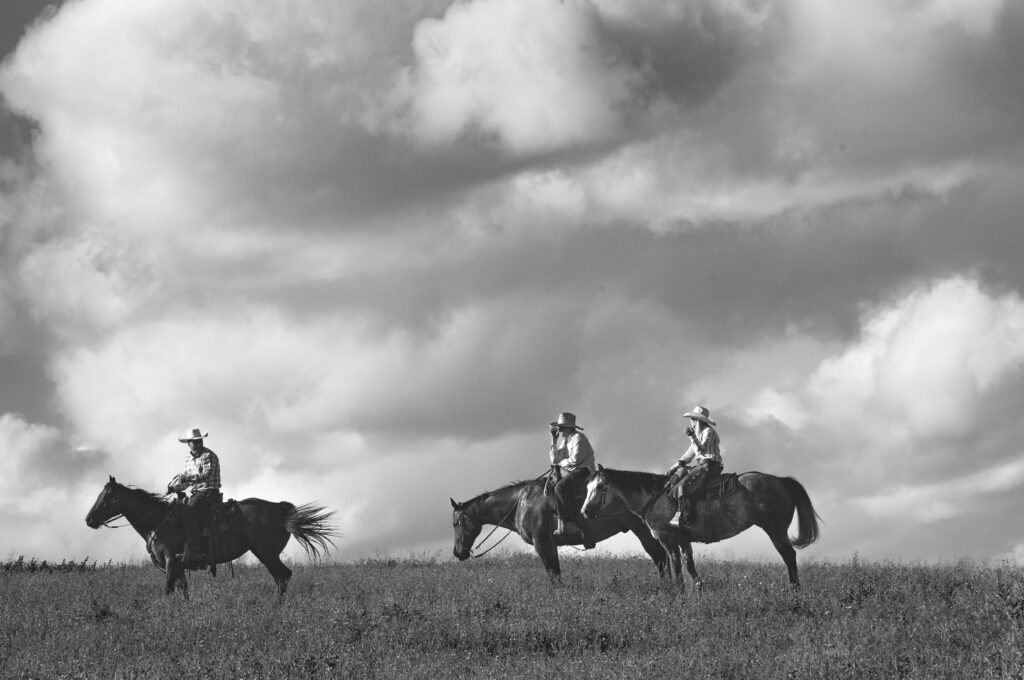
For the ranchers, farmers, and land managers I’ve met over the past 15 years, the idea of home is deeply connected to the land and ground they work. Hence, the title of my book – HOMEGROUND. Many adhere to Aldo Leopold’s concept of a land ethic by adopting a view of “home” that extends well beyond the barns and other structures to include the entire ecosystem. It is a place where identity and a sense of belonging are deeply rooted, and every aspect of life is intertwined with the land they nurture and depend upon.

 Today, less than two percent of our population earns a living working the land. For most of us, the idea of home has evolved into a dynamic blend of tradition and innovation, reflecting our diverse and highly mobile world. It is one that is often far removed from the land of our forebearers and ancestors. In our rapidly changing world, finding that connection can seem increasingly elusive, yet it is essential for our well-being, sense of belonging, and the health of our planet. By spending time outdoors, whether through hiking, gardening, or simply walking in a local park, we can reconnect with the rhythms of nature and the beauty of our surroundings. Engaging with the land allows us to appreciate the intricate web of life that sustains us and fosters a sense of belonging, stewardship, and responsibility for its care. ©Sally Thomson