

Black: The Forgotten Color of Fall
By Levi Johnson
Originally published in Resilience, Issue #46 – Colors of Home
When we think of fall, bright yellow, crimson red, and fiery orange typically come to mind. Autumn is a season that evokes closure for some, excitement for others, and dismay for many. Whether it’s the celebration of a harvest or the creeping dread of withering crops and shortening days, I believe fall should ultimately symbolize one thing: resilience.
I understand that may seem counterintuitive. After all, this is the season where landscapes turn brittle, where trees shed their canopies, and the soil begins to chill. But beneath all that decay is preparation — a hidden renewal already underway. And while fall is known for its brilliance, I often reflect on its lesser-known hue: black, the color of rich, carbon-loaded soil.
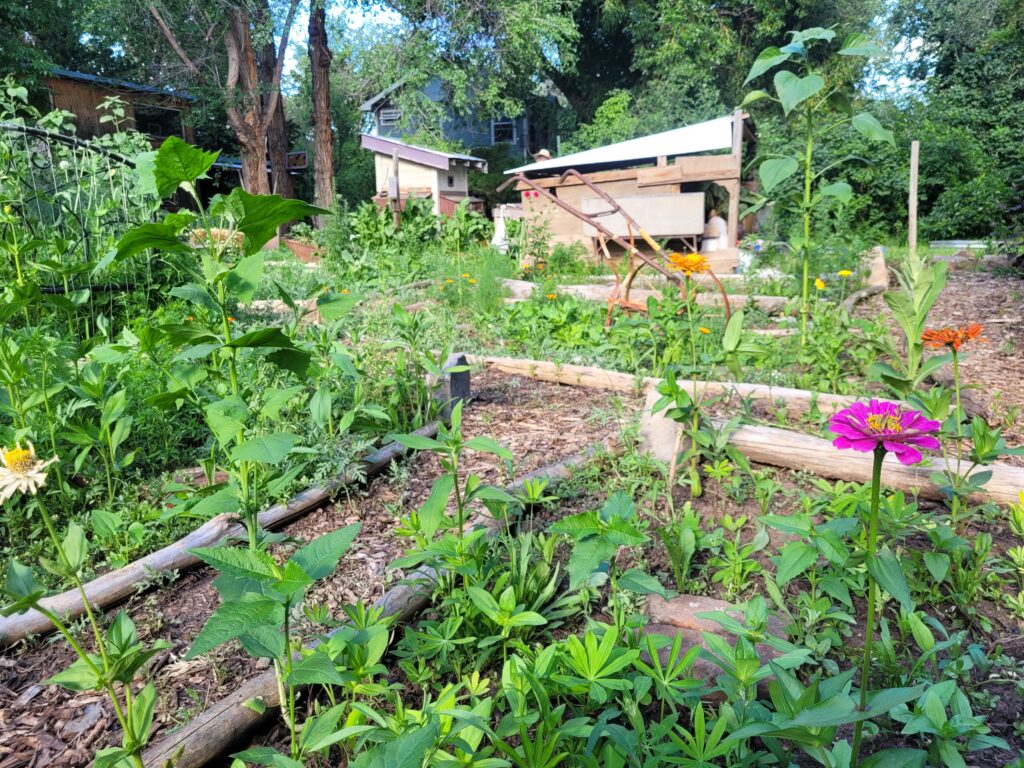
After graduating from Colorado State University in 2022, I moved into a home on an acre of land in northern Colorado. The landlady, a generous and socially-conscious woman, gave me free rein to garden and landscape however I pleased. For a budding soil scientist, it was a dream. I began by crafting a modest Zen garden beneath a mature blue spruce in the front yard, complete with a sitting area and winding paths for reflection.
But the real transformation began that fall, in the backyard, with a plan for a pollinator garden. Pigs had once been used to clear out an infestation of smooth brome grass, a tenacious non-native species. The pigs did their job, leaving behind compacted but nutrient-rich earth, shaped by their wallowing and enriched by their waste.
I chose not to till deeply, just a light loosening of the soil to restore grade and introduce oxygen. This kind of gentle aeration helps preserve soil aggregates — small clumps of particles that create space for air, water, and roots — while also maintaining fungal networks and supporting microbes that break down organic matter and feed plants.
I laid out garden beds using sun-bleached branches from the property, then seeded a mix of annuals and perennials. While some were native and others not (none of them invasives) my guiding thought was that ground cover, even temporary, protects soil and supports structure better than bare earth exposed to wind and weather.
Besides, I reasoned that I needn’t bother tilling when deep-rooted perennial plants can do that for me.
To finish, I blanketed the beds with fallen leaves gathered from the yard and charitable neighbors. This leaf litter would break down slowly over winter, boosting organic matter, encouraging microbial activity, and eventually forming a rich humus layer, often called black gold by gardeners.
Fall is arguably the toughest season for gardening. You’ve harvested, yes, but now must plant again: cover crops, annuals, and perennials. It demands forward thinking. What grew here? What comes next? What will thrive in this rotation or microclimate? Yet, there’s hope in that work. For me, fall always brings the thrill of possibility. I couldn’t wait to see what would emerge come spring.
What I came to appreciate most about fall, more than the transformation above ground, was the activity still pulsing below the surface. Even as the air cooled and plants began to die back, the soil stayed alive. Beneath those leaf-covered beds, an invisible workforce of microbes, fungi, and invertebrates was hard at work. Earthworms turned the leaf litter into castings, bacteria broke down organic matter, and mycorrhizal fungi formed unseen partnerships with roots, trading nutrients for carbon sugars.
This living network — the soil biota — is what makes soil more than just dirt. It’s the engine of soil health, regulating everything from nutrient cycling to disease suppression. Nutrient cycling refers to the way soil organisms break down dead plants, leaves, and organic matter into simpler forms of nutrients that other plants can use, basically like a natural composting system happening constantly beneath our feet. Without it, soils would eventually run out of accessible food for plants.
Autumn offers a final flourish. Organic matter accumulates, the ground holds its warmth, and the soil life rallies in full force. By feeding the soil in fall through mulching, compost, or even leaving plant roots intact after harvest, we’re giving this underground community the resources it needs to sustain itself through winter and support new growth come spring.
This isn’t just relevant for backyard gardens; it’s a foundational concept in agriculture too. Many farmers time their soil prep for the fall, not just to beat spring rains or labor bottlenecks, but because of what fall soil biology can accomplish. When they plant winter wheat, rye, or cover crops like hairy vetch or crimson clover, they’re tapping into this natural system. These crops germinate before the freeze, quietly establish roots, and then go dormant, holding the soil in place and building structure through the coldest months. Come spring, they’re already growing, taking advantage of moisture, shading out weeds, and contributing organic matter when turned under or grazed.
Preparing beds in the fall, whether in a backyard or on hundreds of acres, is about more than getting ahead. It’s about working with the season, acknowledging that rest and resilience aren’t passive states. These are active, living processes that unfold in the cold and dark.
***
But let us not forget to whom the color of all colors owes its humble origins. Fall may whisper of dormancy, but it shouts in color, and soil, like the season, is no less vibrant when you learn to read it.
Take red soils, for example. In the same way that sugar maples blaze crimson in October, some soils wear their redness with pride. These hues often point to iron oxidation — iron minerals weathered by time and moisture, giving rise to deep, rusty reds and burnt oranges. You’ll find these colors in the well-drained uplands of the South and parts of the Colorado Front Range foothills. The presence of hematite or goethite – iron oxides formed through cycles of wetting and drying – is more than aesthetic as it tells a story of climate, drainage, and the soil’s ability to breathe.
Then there are the yellows and ochres, echoing the changing cottonwoods along river corridors. Yellow soils tend to form in more consistently moist conditions, where iron is present but less oxidized, often due to a slightly lower pH or periodic saturation that slows the oxidation process. These soils may occur in alluvial valleys or on north-facing slopes where moisture lingers. They’re transitional in nature, hinting at both fertility and instability, depending on how water moves through them.
Brown soils — the earthy, umber tones we associate with tree bark and tilled fields — often indicate a healthy balance of minerals and organic matter. They’re the generalists of the soil color spectrum, versatile and adaptable. Their coloration can result from partially decomposed organic residues mixing with silicate clays and iron oxides, which also contribute to their ability to retain moisture. These are the soils that support much of our agriculture: not flashy, not extreme, but full of potential.
But gray or bluish soils, which are often found in low-lying areas where water sits for long periods, are a sign that the ground doesn’t drain well. These are known as gleyed soils, and their color comes from the way waterlogged conditions push out oxygen. In places like this, certain microbes that don’t need oxygen take over, changing the soil chemistry and removing the natural reddish tones that iron usually imparts. These muted colors are a quiet warning that in these places, water lingers rather than drains, which is an important clue for anyone planting crops or restoring native ecosystems.
And then there’s the revered black soil, rich in organic matter, especially humus, which coats soil particles and darkens them like coffee grounds. High in carbon and microbial life, these soils are typically found in cool, semi-humid grassland regions like the prairies of the Midwest or, on a smaller scale, places like the garden beds of the Colorado Front Range. They’re often the result of centuries of root and litter turnover, storing not just nutrients but stories of past ecosystems.
What makes all these colors so meaningful is their connection to the soil-forming factors outlined in the discipline known as pedology: climate, organisms, relief, parent material, and time. Soil color is an outward expression of these inward processes. Just as tree leaves change based on daylight and temperature, soil transforms based on chemistry, biology, and history — not just the present but the legacy of what’s been.
These colors don’t appear in isolation; they reflect the environments in which soils form. In high-elevation meadows where cool, moist conditions slow down decomposition, soils may appear darker from the buildup of organic matter. In contrast, arid plains often reveal paler, sometimes reddish hues, where calcium carbonate builds up because there isn’t enough rain to wash it deep into the ground. This mineral is important. In some cases it can balance the acidity of soils, affect how nutrients move and are stored, and even help the soil hold together better. But too much of it can make it harder for plants to get certain nutrients they need, most notably phosphorus, a key macronutrient. These clues from the environment shape how soil feels, what it can grow, and how much life it can support.
And the life they host is layered. Soil biota — bacteria, fungi, nematodes, and other microfauna — respond to these physical and chemical signals. In darker, carbon-rich soils, microbial diversity tends to be higher, promoting nutrient cycling and structural stability. In poorly drained, low-oxygen zones, certain anaerobic microbes dominate, shifting the balance of processes like nitrogen availability and methane production. The former weakens plant growth while the latter contributes to greenhouse gas emissions that affect us all.
As microbial communities shift, so too do the organisms that feed on them. Meso- and macrofauna like springtails, mites, beetles, and earthworms, depend on healthy microbial populations to break down plant matter and form aggregates that make soils habitable. These organisms, in turn, aerate the soil, improve infiltration, and transport nutrients upward, linking the micro and macro scales of the soil ecosystem.
And it doesn’t stop underground. These shifts ripple upward into the plant community, influencing which species thrive, how resilient they are to drought or disease, and what kind of habitat they offer to pollinators, birds, and mammals. Ultimately, these differences affect us as well, whether we’re harvesting a field of grain, walking through a woodland trail, or deciding how best to steward the land. The color of soil – just as the color offFall – is chemistry. The life supported by soils is implicitly connected to the complex web that caused the formation of that soil. Understanding that web brings us closer not only to the land but to the seasons that shape it, and ultimately, our own ability to thrive within the rhythms of nature.
So, when fall rolls around and you see those vivid leaf piles accumulating, remember: it’s not just a seasonal spectacle. It’s a mirror of the very ground you walk on. Red, yellow, brown, and yes, even black — these colors don’t end at the treetops. They continue underfoot, where roots anchor, worms tunnel, and fungi form silent symbiotic networks.
And for gardeners and farmers alike, understanding this color palette isn’t just poetic, it’s practical. It informs what crops will thrive, how to manage water, when to amend, and what a soil might need or already have. Fall preparation, then, becomes an act of translation: interpreting what the soil is saying, responding in kind, and planting with both memory and intention. Because even in the season of dying light, there’s a spectrum of life unfolding, quietly, colorfully, and always just beneath the surface.