

Peaches, Pecans, and Pinot: Grazing in Orchards and Vineyards
RSVP for Event
Details
Date
- Apr 07 2026
Time
- 6:00 pm - 7:15 pm
Location
- Virtual
Download / Add Event to your Calendar
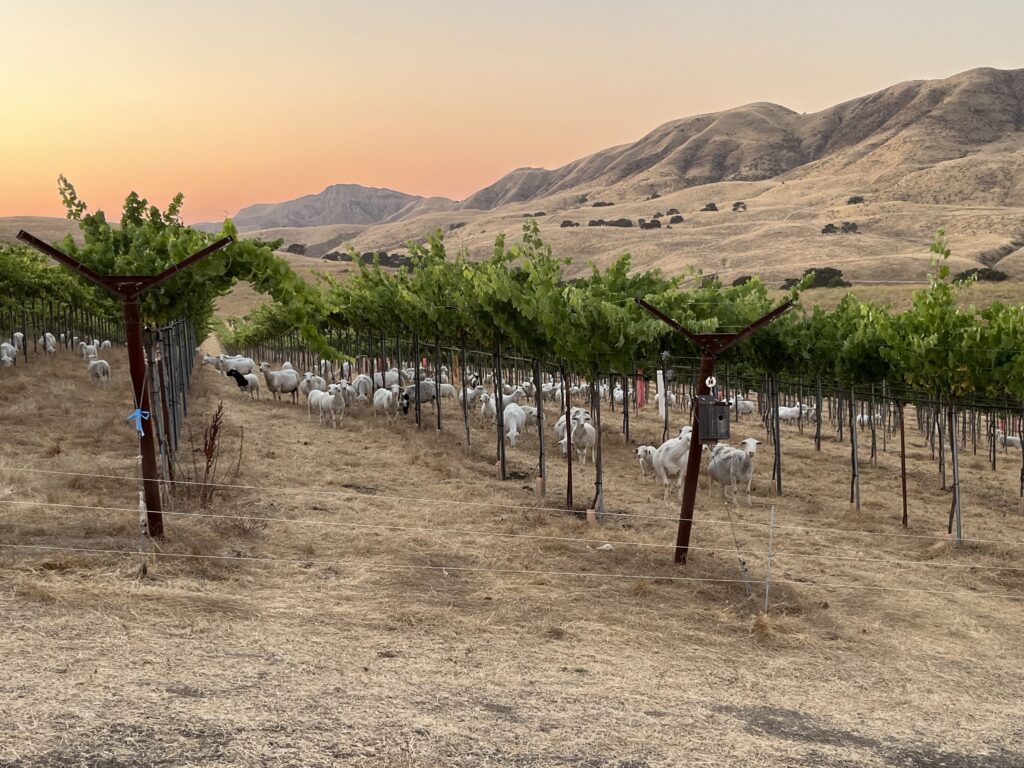
What happens when livestock and perennial crops share the same landscape?
Across the country, innovative farmers and ranchers are integrating livestock into orchards and vineyards to improve soil health, reduce inputs, and build resilient agricultural systems; these integrated systems are transforming how perennial crops are managed.
Join us for a dynamic panel discussion with farmers, ranchers, and land managers who are actively grazing livestock in orchards and vineyards. Panelists will share real-world experiences from diverse operations, including a regenerative peach orchard, a targeted sheep grazing business working with vineyards, a regenerative winegrowing program, and a pecan orchard integrating multiple livestock species.
Together we’ll explore:
– Ecological benefits of integrating livestock with perennial crops
– How grazing can improve soil health, biodiversity, and nutrient cycling
– Practical considerations for timing, species selection, and infrastructure
– Economic opportunities and risks of livestock integration
– Lessons learned from both successes and challenges
Whether you manage orchards, vineyards, rangelands, or are simply curious about stacking enterprises in regenerative agriculture, this conversation will offer valuable insights from practitioners working at the intersection of livestock and perennial cropping systems.
Photo from Paicines Ranch
More Information
Speaker Bios
Chicken Grit Farms: Matt
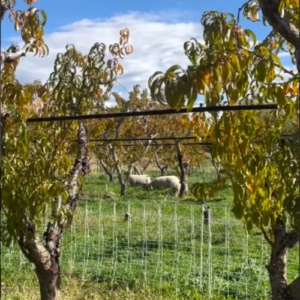 Chicken Grit Farms is a regenerative, bio-diverse, pasture-raised poultry, peach, pig, and sheep services farm in Palisade, Colorado. Our main cash crop is peaches, however, we leverage livestock integration to the maximum possible effect.
Naked Grazing: Jared Lloyd
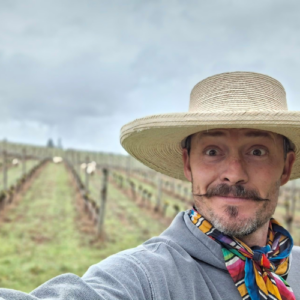 Jared is a fifth-generation Coloradan rancher — recently relocated to Oregon — who focused on targeted grazing and direct to consumer lamb and wool sales. He is an American Sheep Industry Association certified wool classer, retired shearer, and currently owns and operates Naked Grazing, a targeted grazing company focusing primarily on vineyards and oak savanna restoration projects with several hundred head of Horned Dorset and Shetland ewes. He also custom grazes feeders and breeding ewes for other producers. His work is very public-facing, promoting lamb and interacting symbiotically with the wine industry.
Paicines Ranch: Kelly Mulville
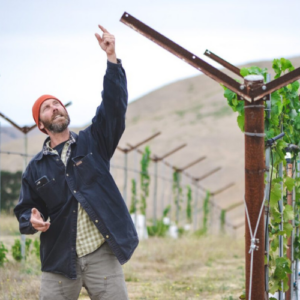 For the past 25 years, Kelly has managed and consulted with vineyards, farms, and ranches throughout the western United States, New Zealand, Australia, and Spain. His focus is on combining experience in farming and viticulture with holistic management to design and manage more ecologically, socially, and economically sound farming practices that profitably restore biodiversity to agricultural land. This usually involves a considerable amount of help from livestock. Kelly regularly presents at numerous conferences throughout the United States and internationally. Kelly has been vineyard director at Paicines Ranch since 2014.
RioGro: Josh Bowman
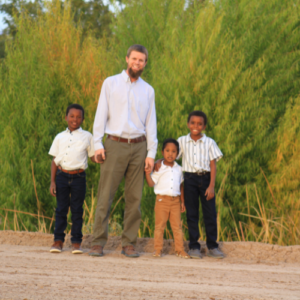 From the age of eight, Josh spent his free time working on the family farm, which involved many hours on the seat of a tractor. His father was an agronomist who was blamed for always being ahead of the curve because he applied soil health principles to his farm with successful results in the 80’s and 90’s.
After spending nine years in the Pacific Northwest growing apples, cherries, pears, and alfalfa, Josh relocated from Washington to the Mesilla Valley in New Mexico where he took an opportunity to manage a pecan orchard. While experimenting with cover crops and beginning to implement regenerative practices on the pecan farm, exciting changes began to take place in the soils and the resulting crops. To Josh, a new paradigm began to unfold which needed to become mainstream. After seven years of start up, operating, and selling a growing ag consulting firm (Rio Gro LLC), Josh is back on the farm full-time with his growing boys producing pecans, wheat, cattle, sheep, chickens — regeneratively.